Loading...
Serving Manhattan, KS and surrounding areas. (785) 236-2287
If your home has empty or under-insulated walls, you are paying to heat and cool the outdoors. We fix that with clean, same-day blown-in wall insulation.
Wall insulation in Manhattan fills the empty cavities inside your exterior walls to slow heat movement in both directions - most jobs on a typical finished home are completed in one to two days with no major disruption to your routine.
Most homes in Manhattan were built before the late 1970s, and many of those walls were never properly insulated. You might be surprised how much heat your home loses straight through those walls every winter - and how much hot air pours in during July. Wall insulation addresses that directly.
If you are already thinking about comfort upgrades, pairing wall insulation with air sealing services gets you the biggest efficiency gain, since the two work as a team to stop both heat conduction and air movement.
If your Evergy bill climbs sharply from November through February without a clear reason, your walls may be losing heat as fast as your furnace generates it. Manhattan winters regularly bring hard freezes, and under-insulated walls make the problem worse every year.
If the north or west side of your house never warms up on a blustery January day, your walls on that side may be empty. You may also feel faint drafts near outlets or light switches on exterior walls - a sign cold air is moving straight through the wall cavity.
Homes in Manhattan's Aggieville and Bluemont neighborhoods, and across the KSU campus area, were often built with little or no wall insulation by today's standards. If you have never had insulation work done, there is a good chance your walls are empty or close to it.
When warm indoor air meets a cold, uninsulated wall surface, moisture forms on the inside face - similar to how a cold glass sweats. If you see paint peeling near the base of exterior walls or moisture on drywall in winter, poor wall insulation is often the cause. Left unaddressed, this leads to mold.
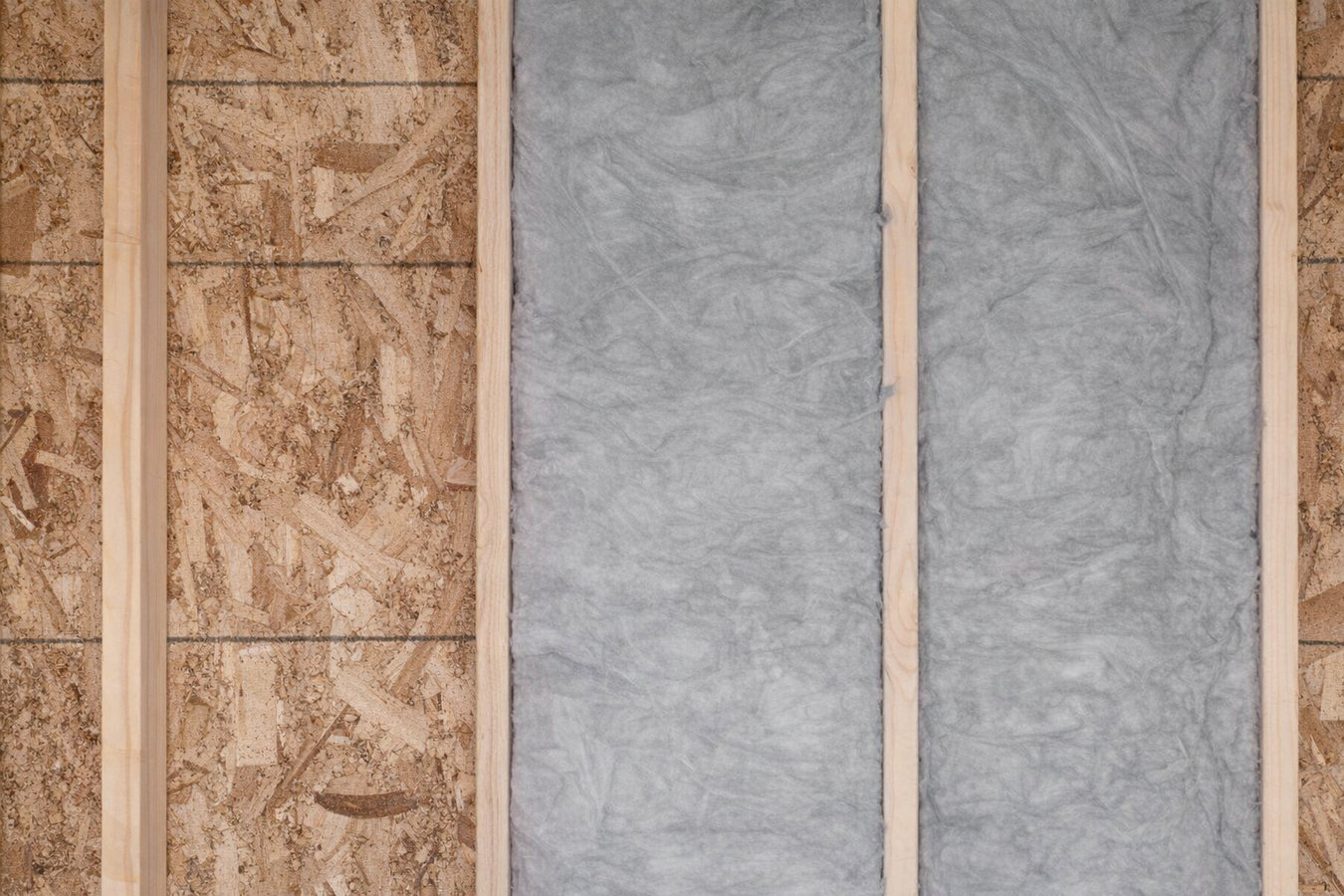
For most finished walls in Manhattan homes, blown-in loose-fill is the right approach. We drill small holes between each wall stud, fill the cavity completely, then patch and paint so cleanly that you will barely notice the work was done. This method reaches every corner of the cavity without tearing out drywall - it is the same method that pairs naturally with blown-in insulation in attics and other hard-to-reach areas.
For walls that are already open during a renovation or new construction, we apply spray foam or batt insulation directly before the drywall goes up. This gives you a denser, higher-R result and the option to combine it with air sealing services in the same visit - sealing every gap around wires, pipes, and framing at the same time. Either route, we assess your specific walls first and recommend the approach that makes the most sense for your home and budget.
Best for finished walls where drilling and patching is preferred over opening drywall.
Best for open walls during renovation or new construction where high R-value and air sealing are priorities.
Best for open-wall remodels on a budget where the cavity is clean and accessible.
Best for older Manhattan homes with settled or absent insulation in finished exterior walls.
Manhattan sits in DOE Climate Zone 5, which puts it in the category of "significantly cold winters and hot summers" - a range that demands more from your home's shell than a milder climate would. The Flint Hills surrounding the city are among the windiest areas in the continental United States, and wind-driven air infiltration through empty walls makes an under-insulated home feel much colder than the thermostat reading suggests. Homes in Junction City and across the region share this same climate exposure, and wall insulation is consistently one of the highest-return improvements you can make here.
A large share of Manhattan's housing stock - especially the homes near the KSU campus and in older areas like Aggieville - was built before the late 1970s, often with no wall insulation at all. The energy crisis of that era had not yet reached the building trades when many of those homes went up. Homeowners in Abilene and across northeast Kansas face the same inherited problem: walls that looked fine from the outside but were never given the thermal layer they needed. Evergy rebate programs can help offset the cost of fixing this, and a good contractor will walk you through what is currently available before you commit to anything.
We will ask a few basic questions - your home's age, which walls concern you, and whether they are finished or open. We reply within 1 business day and can usually schedule your in-home assessment within a few days.
A contractor walks your home's exterior walls and uses a probe or thermal camera to check whether insulation is present and how much. This visit takes 30 to 60 minutes and comes with a clear explanation of what we find before you commit to anything.
Your estimate breaks down cost by wall section and explains the recommended approach in plain language. This is also the right time to ask about Evergy rebates - we will tell you what applies to your specific project.
On installation day, move furniture two feet from exterior walls and we handle the rest. Most Manhattan homes are finished in a single day. Before we leave, we walk through the patched areas with you and answer any questions.
Free estimate, no obligation. We reply within 1 business day.
(785) 236-2287A large share of our work is in older Manhattan neighborhoods where walls were never insulated to begin with. We know what to expect inside a 1950s wall cavity - and how to fill it completely without damaging the plaster or drywall you want to keep.
We cover Manhattan, Junction City, Abilene, Salina, Topeka, and every community in between. You get the same crew and the same standards whether your home is a block from the K-State campus or out in a newer subdivision on the city's edge.
We use density checks and thermal imaging to confirm insulation reached every corner of the wall cavity before we patch. The Building Performance Institute sets the standard for this kind of verification, and it is how we prove the work actually made a difference - not just our word for it.
Your written estimate breaks down cost by wall section in plain language. We explain every line item, answer every question, and do not start until you are comfortable with the scope and price. No surprises on the invoice.
Our combination of local housing knowledge and verified installation methods means you get a result you can feel on the first cold, windy Manhattan day after the work is done.
The U.S. Department of Energy recommends specific R-values for walls in Climate Zone 5, which covers Manhattan. Ask us how your current walls compare during your free assessment.
Pair wall insulation with professional air sealing to stop heat conduction and air movement at the same time.
Learn moreThe same loose-fill technique used in walls also works in attics and floors for whole-home coverage.
Learn moreManhattan winters are long - the sooner your walls are insulated, the sooner you stop losing heat. We have openings this week.