Loading...
Serving Manhattan, KS and surrounding areas. (785) 236-2287
Cold spots upstairs, high heating bills, and ice dams on the roof are all signs your attic needs better coverage. Blown-in insulation fills every gap so your home stays comfortable year-round.
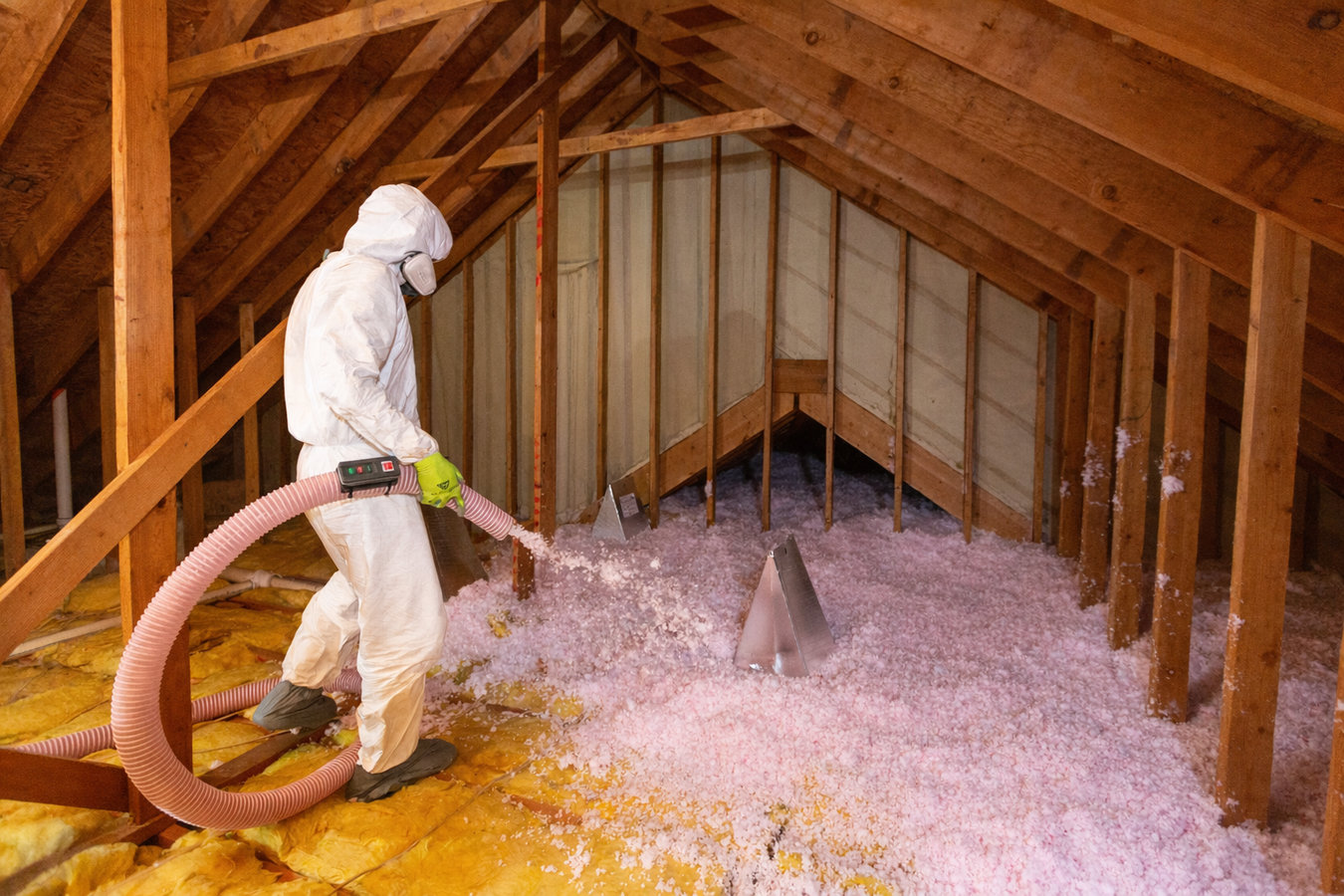
Blown-in insulation in Manhattan, KS uses a machine-driven hose to fill your attic with loose fiberglass or cellulose material - most jobs on a single-story home take a half day and deliver immediate results. Unlike rigid boards or batt rolls, the loose material works its way into corners, around pipes, and through irregular framing that leaves gaps in other insulation types.
Manhattan homes built before 1990 very commonly have attics that fall short of today's recommended depth. If your home is in one of the established neighborhoods near downtown or near K-State, there is a real chance the original insulation has settled and thinned over the decades. Pairing blown-in material with attic insulation services gives you the most complete thermal barrier.
The U.S. Department of Energy recommends attics in Kansas reach R-49 to R-60 - roughly 14 to 20 inches of blown-in material. The DOE insulation guide explains how those numbers translate into real-world comfort and cost savings.
If your heating or cooling costs have crept up without explanation, your attic is one of the first places to look. In Manhattan's climate - cold winters and hot summers - an under-insulated attic adds real cost in both directions all year long.
Rooms directly below the attic that are always a few degrees warmer or colder than the rest of the house are a sign heat is passing through your ceiling freely. This is especially common in Manhattan homes built before 1985, where original insulation has had decades to settle.
If you peek into your attic and can clearly see the wooden beams running across the floor, your insulation is almost certainly too thin. A properly insulated attic in this climate should have insulation deep enough to bury those joists completely.
Ice dams - the ridges of ice that build up along roof edges after snowfall - mean heat is escaping through your attic and melting snow unevenly. Manhattan gets enough winter precipitation and cold snaps that ice dams are a real problem, and they can cause water damage inside your home.
We install both fiberglass and cellulose blown-in insulation depending on what your attic needs. Cellulose - made from recycled paper treated with a fire retardant - is dense enough to reduce sound as well as heat transfer. Fiberglass blown-in is lighter, does not settle as much over time, and works especially well for top-ups over existing batt insulation. If your home also needs wall coverage, we can discuss whole-home insulation to address every part of the envelope in one project.
Every blown-in job starts with air-sealing, including retrofit insulation projects where existing material stays in place. Before any material goes in, we seal gaps around pipes, wires, and recessed lights - the step that makes the real difference in your energy bills. Homeowners who have had insulation added without that prep step first often don not feel the expected improvement, because air still moves freely through the gaps below the new layer.
Best for topping up existing batt insulation in older attics without disturbing what is already there.
Good fit for homes wanting recycled content and slightly denser coverage that also reduces sound transmission.
Recommended for any home where energy bills suggest air is moving through the attic floor - the most impactful prep step.
Right choice when existing insulation is contaminated, water-damaged, or so thin it makes more sense to start fresh.
Manhattan sits in a climate zone where summer temperatures push into the upper 90s and winter lows can drop well below zero with wind chill from the Flint Hills. Your attic insulation works hard in both directions - keeping heat out in July and keeping it in during January. Homes in established neighborhoods near K-State and Aggieville were frequently built with minimal attic coverage by today's standards. A large share of them were also rental properties for years, which means insulation rarely got the attention it needed between tenants.
We serve homeowners across the Manhattan area, including Junction City and Abilene. The persistent wind across this part of Kansas makes air-sealing especially important - wind pressure drives cold air through gaps that would cause less trouble in a calmer climate. We treat that step as standard, not optional.
We respond within 1 business day. A quick conversation covers your home's age, which areas you want addressed, and what's prompting the call - so we arrive prepared.
We visit your attic, measure the existing insulation depth, and check for air gaps around pipes and fixtures. You get a written estimate before any work is scheduled. No obligation.
On the job day, gaps around pipes, wires, and lights are sealed before any material goes in. This is the step that determines how much of the efficiency gain you actually feel.
The machine runs outside while the hose feeds material evenly across your attic floor - typically two to four hours. We walk you through the finished depth before we leave.
We respond within 1 business day. There is no obligation - fill out the form and someone from our office will call to schedule a free on-site estimate. We will walk you through exactly what your attic needs before any work begins.
(785) 236-2287We seal gaps around pipes, wires, and fixtures before any material goes in. Contractors who skip that step leave money on the table for you - the air-sealing is where most of the efficiency gain comes from.
We follow the Department of Energy's recommendation for Climate Zone 5 - the zone Manhattan falls in. You get a job done to the right standard, not just enough to look finished.
We work across the Manhattan metro and surrounding communities. Local knowledge matters when older homes near campus need a different approach than newer builds on the north side.
You get a full written quote after the assessment. Nothing proceeds until you are comfortable with the scope and price. The estimate visit costs you nothing.
The combination of proper air-sealing and correct insulation depth is what turns a good-looking job into one that actually shows up on your utility bill. That is the standard we hold to on every project in Manhattan and the surrounding area.
Cover every part of your home's thermal envelope - attic, walls, and crawl space - in one coordinated project.
Learn moreFocused attic work combining inspection, air-sealing, and the right insulation depth for your home's age and layout.
Learn moreScheduling fills up fast in fall and spring - reach out now and we will get your attic assessed before the next season hits.