
Loading...
Serving Manhattan, KS and surrounding areas. (785) 236-2287
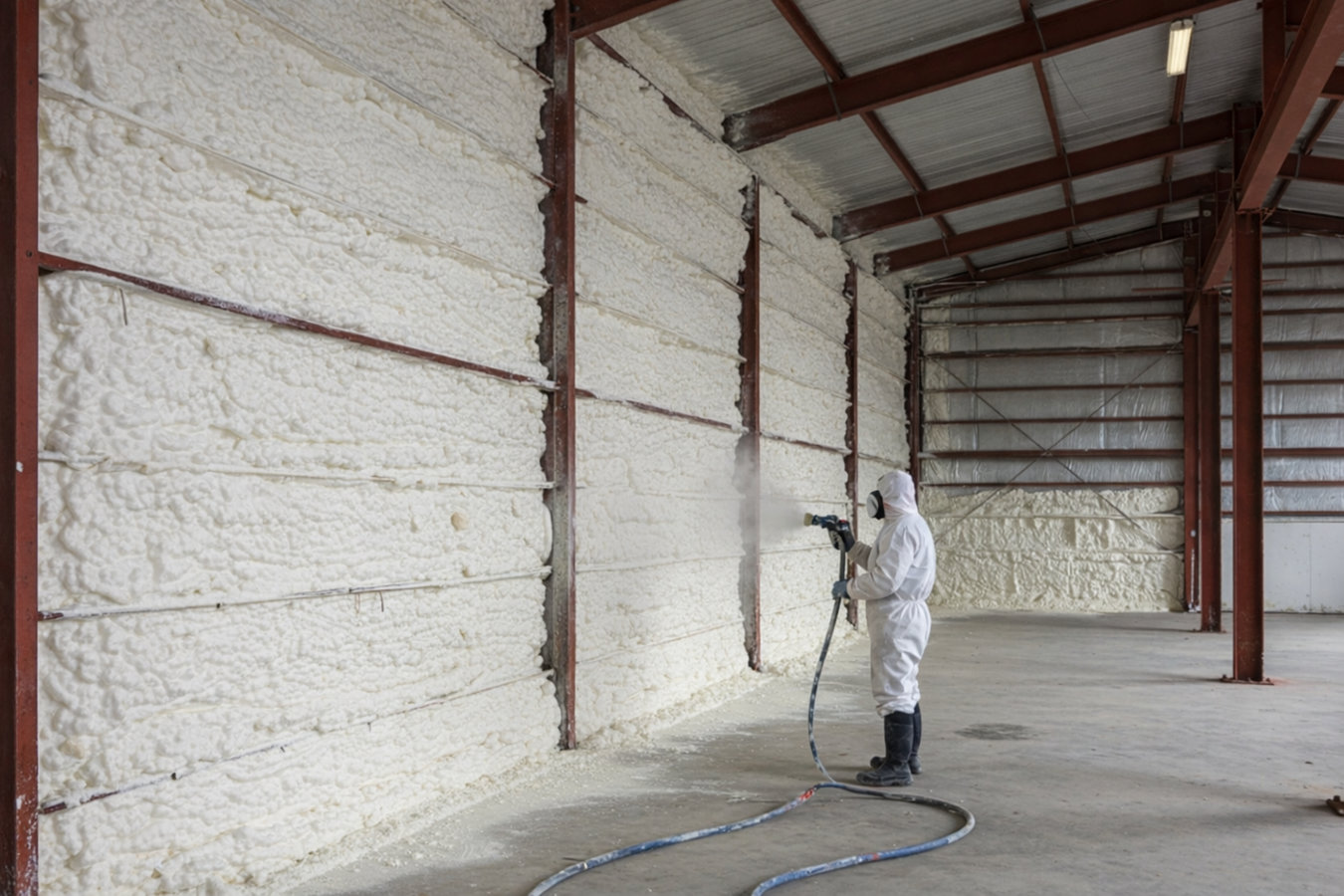
Offices, warehouses, and rental properties in Manhattan lose money every month to poor insulation. We install commercial insulation, handle Riley County permits, and give you written quotes before any work begins.
Commercial insulation in Manhattan, KS slows heat transfer through your building's walls, roof, and floors - most projects run one to five days depending on building size and material type. In winter it keeps warm air inside; in summer it keeps hot air out. The result is a building that holds its temperature without running your HVAC constantly, and lower energy bills that reflect the difference within the first full heating season.
Manhattan commercial buildings face particular challenges: older construction near downtown and the Kansas State University campus often has little or no wall insulation, and the city's extreme temperature swings mean any gaps in the building envelope are felt directly in utility costs and tenant comfort. If you manage rental properties or a commercial space and tenants are complaining about comfort, insulation is often the root cause. Pairing a commercial insulation upgrade with spray foam insulation in wall cavities and hard-to-reach spaces gives you both thermal resistance and air sealing in one visit.
The U.S. Department of Energy estimates that properly insulated commercial buildings can cut heating and cooling costs by 15 to 20 percent or more. In a Manhattan, KS building that has been running on inadequate or aging insulation, the payback period is often shorter than building owners expect. See the DOE insulation guidance.
If your heating and cooling costs have climbed steadily with no change in usage, poor insulation is one of the most common causes. In Manhattan's climate - running heat hard from November through March and air conditioning through the summer - an under-insulated building works your HVAC overtime. A noticeable jump compared to similar buildings nearby is worth investigating.
If parts of your building are consistently uncomfortable no matter how hard the HVAC runs, uneven insulation is often the reason. In older commercial buildings along Poyntz Avenue or near the KSU campus, walls and ceilings that were never properly insulated create cold pockets in winter and hot spots in summer. Tenant or employee complaints about specific rooms are a reliable signal.
Feeling a chill near an exterior wall on a cold January day in Manhattan - even when the heat is running - means air is moving through gaps in the building envelope. Buildings that have had additions or renovations over the years often have connection points where original construction and new work do not meet cleanly, leaving gaps that let in Kansas wind.
If your building has had a roof leak, plumbing failure, or any flooding - a real possibility given Manhattan's spring storm season - insulation that got wet needs to be inspected and likely replaced. Wet insulation does not dry out properly and can harbor mold. Even without water damage, insulation more than 20 to 30 years old may have settled enough that it is no longer doing its job.
We install spray foam, rigid foam board, and blown-in insulation in commercial buildings throughout Manhattan and the surrounding area. The right material depends on your building - spray foam is the best choice when air sealing is the priority in irregular or hard-to-reach spaces. Rigid foam board suits new construction and roof assemblies where continuous insulation is required by Kansas energy code. Blown-in loose fill is often the most cost-effective option for large open attic spaces in older buildings.
For building owners planning work between tenants or during a summer break - a common pattern in the KSU rental market - we give you a firm start date and a realistic completion window before we begin. We also work alongside crawl space vapor barrier installation when moisture management is part of the project, which it often should be in Manhattan given the Flint Hills spring rain season. The North American Insulation Manufacturers Association publishes installation standards for commercial work that you can reference when evaluating quotes: naima.org.
Suits warehouses, open ceiling spaces, and commercial buildings where air sealing is the primary need.
Common in new commercial construction and roof assemblies where continuous insulation is required by code.
The most cost-effective option for large open attic spaces in commercial buildings.
For occupied older buildings in downtown Manhattan that need upgraded insulation without major disruption.
Manhattan sits in a climate zone that sees summer highs above 100 degrees and winter lows well below zero - a swing of more than 100 degrees that demands serious insulation performance at both extremes. The Flint Hills region also brings significant spring rainfall and high summer humidity, which means moisture management is not optional. Insulation installed without appropriate vapor barriers in this climate can trap water and create mold inside walls and ceilings within a season. Commercial buildings in downtown Manhattan and along Poyntz Avenue were often built before modern energy codes and have little to no wall insulation - exactly the buildings where an upgrade delivers the fastest payback. Riley County energy codes, based on the International Energy Conservation Code, set minimum insulation requirements for commercial buildings in this climate zone. Any permitted project must meet those minimums, and Manhattan building owners are increasingly using renovations to bring older properties up to standard.
Manhattan's economy is closely tied to Kansas State University, which means a large share of the commercial building stock - including rental properties, offices, and retail near campus - turns over tenants on a schedule tied to the academic calendar. Landlords and property managers in this market often schedule insulation upgrades during summer breaks when buildings are easier to access and disruption is minimal. Building owners in Salina and other nearby commercial centers face similar planning considerations and similar climate demands.
We ask about your building type, size, and what problem you are trying to solve. Most Manhattan building owners can schedule a site visit within a few days. We reply to all inquiries within 1 business day.
We walk the building, take measurements, note existing insulation, and flag any moisture or air sealing issues. Within a few days you receive a written, itemized quote - materials, labor, permit fees, and any prep work included.
For most commercial projects in Manhattan, we pull the required Riley County permit. You do not have to contact the building department. Once the permit is in hand, we confirm which areas to clear and what your schedule looks like.
The crew arrives, protects surrounding surfaces, and installs the insulation as quoted. After work is complete, a Riley County inspector verifies the job meets code - we coordinate the visit. We walk through the finished work with you before signing off.
We walk the space, explain your options, and give you an itemized price - no commitment required. We reply within 1 business day.
(785) 236-2287We pull every required permit and coordinate the inspection so you never have to navigate the building department on your own. Your project is documented and code-compliant from day one.
We work with property owners, landlords, and building managers throughout Manhattan and the surrounding area. We understand the KSU rental market, the Poyntz Avenue building stock, and what Kansas energy codes require.
Every quote we provide breaks down materials, labor, permit fees, and prep work so you know exactly what you are paying for before anyone picks up a tool. No surprises on the final invoice.
Manhattan's spring storms and high summer humidity mean insulation installed without proper vapor management can trap moisture. We include moisture barriers where the climate demands them so a wet spring does not become a mold repair call.
We handle the permit process, install to Riley County code requirements, and give you documentation of every step so there are no surprises if you ever sell or refinance the building.
Moisture management under commercial buildings in Manhattan - installed alongside insulation to prevent humidity damage.
Learn moreSpray foam is a common choice for commercial air sealing and insulation in hard-to-reach spaces and irregular wall cavities.
Learn moreSummer is the busiest window for commercial insulation work in Manhattan - lock in your project date before the calendar fills.