
Loading...
Serving Manhattan, KS and surrounding areas. (785) 236-2287
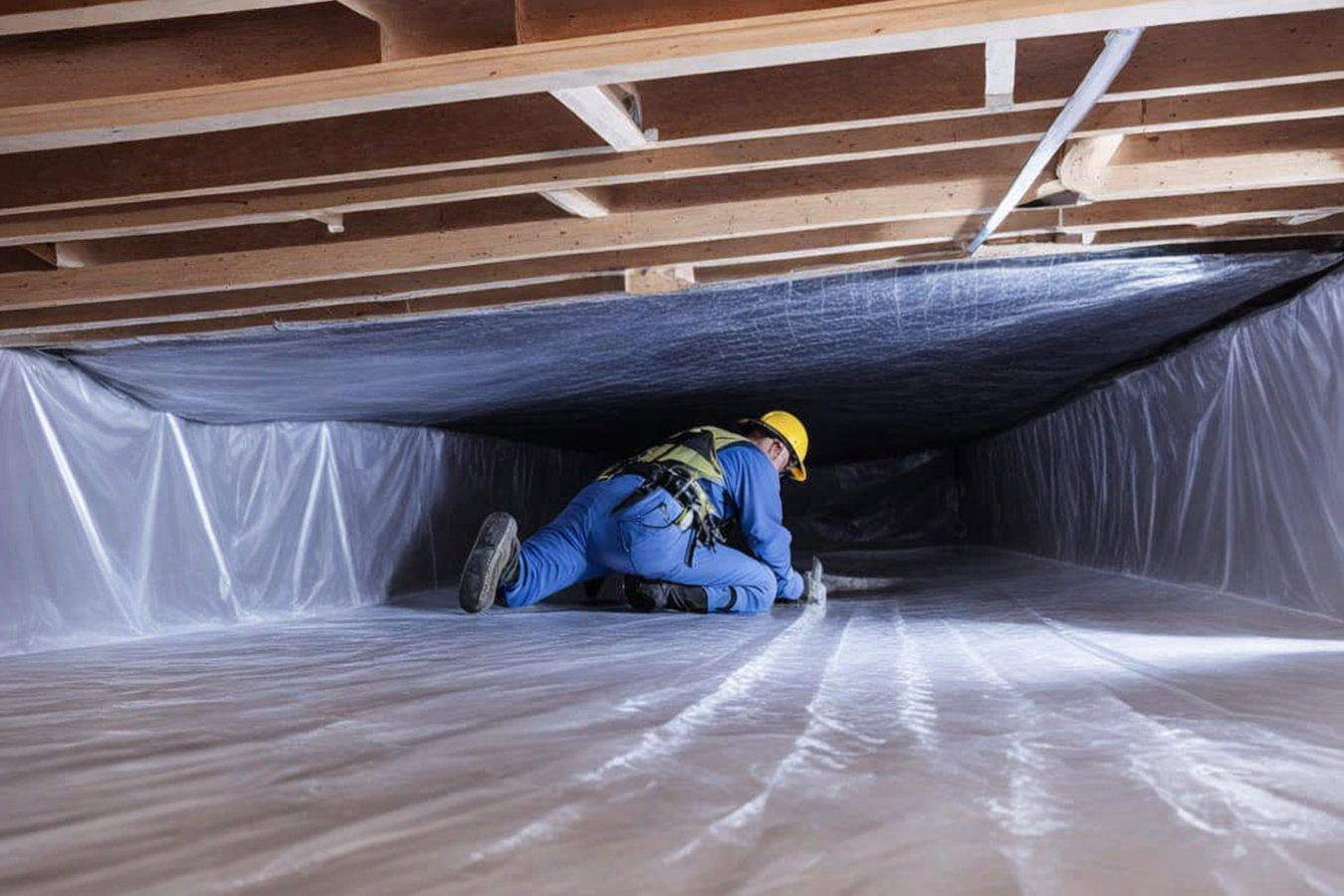
Ground moisture rising through unprotected crawl spaces rots wood, grows mold, and spikes cooling bills. Vapor barrier installation cuts off the source before damage adds up.
Vapor barrier installation in Manhattan, KS blocks ground moisture from rising into your home - most crawl space jobs are completed in one to two days and deliver lasting protection against wood rot, mold, and elevated energy costs. The barrier is heavy-gauge plastic sheeting installed across the exposed dirt floor of your crawl space, with seams overlapped and taped and edges secured to the foundation walls so moisture has no gap to bypass.
Manhattan sits in a humid continental climate with significant spring rainfall and clay-heavy Flint Hills soils that hold water for weeks after a storm. That combination means the ground under your crawl space stays damp for long stretches of the year, releasing moisture upward through whatever opening it can find. In homes built before the 1990s - where vapor barriers were not standard practice - that process has often been running unchecked for decades.
If you are also dealing with air infiltration alongside moisture, pairing this work with crawl space vapor barrier service or attic air sealing gives you a complete approach to what is likely affecting your comfort and utility costs from multiple directions.
If walking across a room produces a slight give or spring in the floor - especially in older Manhattan neighborhoods where floor joists may already be decades old - that softness is often caused by moisture working on the wood from below. This kind of damage progresses slowly, but it gets harder and more expensive to fix the longer it goes unaddressed.
A persistent earthy or musty odor that intensifies during Manhattan's hot, humid July and August is one of the clearest signs that moisture is rising from the ground into your living space. That smell is often mold or mildew growing on damp crawl space wood, and it will not go away on its own until the moisture source is sealed.
If you look into your crawl space and notice water droplets or rust forming on metal pipes or duct connections, the humidity down there is high enough to cause condensation. In Manhattan, where summer dew points regularly reach uncomfortable levels, this is a common finding in homes with no ground moisture barrier.
When moist air rises from an unprotected crawl space into your living area, your air conditioner has to remove that extra humidity on top of cooling the air - which makes it run longer and harder. If your cooling costs climb each summer even though your habits have not changed, elevated crawl space moisture may be contributing.
We specify the barrier material and coverage based on the conditions we find during the crawl space inspection. For most Manhattan homes, a 10- to 20-mil polyethylene barrier covering the full crawl space floor is the right starting point - thick enough to resist puncture and rated to last 20 or more years under typical Flint Hills conditions. We overlap all seams by at least a foot, tape them closed, and secure the perimeter to the foundation walls so the installation holds up over time.
Homes near Wildcat Creek or in the Blue River corridor - where spring flooding has historically elevated ground moisture levels - may benefit from extending the barrier up the foundation walls and combining it with attic air sealing as part of a broader home performance improvement. We discuss all options clearly during the estimate so you can choose the approach that fits your situation and budget.
The core installation - heavy-gauge polyethylene sheeting covering the entire crawl space dirt floor with fully sealed seams and wall edges secured.
For homes with higher moisture pressure, coverage runs up the foundation walls to provide a more complete seal against both floor and wall moisture intrusion.
Pairs vapor barrier work with sealing of crawl space vents and rim joists for homes where both moisture and air infiltration are contributing to comfort problems.
For older homes where a thin or degraded barrier already exists - removing the failed material and replacing it with a properly installed, heavier-gauge barrier.
Manhattan's climate combines hot, humid summers - where temperatures push past 95 degrees and humidity climbs above 70 percent for weeks - with heavy spring rainfall and wide seasonal temperature swings. That combination creates persistent moisture pressure against crawl space floors throughout much of the year. The Flint Hills clay soils around Manhattan absorb water during wet seasons and release it slowly as conditions dry out, meaning moisture is being pushed upward from the ground for weeks after a rain event - not just during the storm itself. Homes sitting on clay-heavy soil benefit especially from a thick, well-sealed barrier because the moisture pressure from below is more persistent than in sandier parts of Kansas.
Manhattan's severe weather season runs from April through June, when heavy rain events can saturate the ground around a foundation in a matter of hours. Scheduling vapor barrier installation in early spring - before contractor calendars fill during storm season - is a practical move that puts protection in place before the highest-risk months. Homeowners in Abilene and the broader central Kansas corridor face similar clay-soil conditions and seasonal timing pressures.
We ask a few quick questions about your home's age, any moisture symptoms you have noticed, and where the crawl space entry is. We respond to all inquiries within 1 business day and can typically schedule an on-site visit within a few days.
A contractor physically inspects the crawl space - checking for existing barriers, moisture damage, and access conditions. You receive a written estimate specifying material thickness, full cost, and whether any permits apply. This visit is free.
The crew lays the barrier material across the crawl space floor, overlaps and tapes all seams, and secures the edges to the foundation walls. You stay home throughout - the crew works entirely below. Most standard-size homes are finished in a single day.
Before leaving, we walk you through the finished crawl space - or show you photos if the space is too tight. We explain what was installed and answer any questions. You leave with documentation of the work for your records and any future home sale.
We provide a free written estimate with material specifications before any work begins. We respond within 1 business day.
(785) 236-2287We have worked on vapor barrier and crawl space projects throughout Manhattan and the surrounding Riley County area. We understand the clay-soil moisture conditions and seasonal patterns that shape what homeowners here actually need.
We confirm whether your project requires a City of Manhattan building permit before any work begins. You never have to wonder whether the paperwork is in order - or deal with compliance issues when you sell your home.
Our quotes specify the thickness of the barrier material we are recommending and why - not just a bottom-line number. You know exactly what you are getting before you agree to anything.
A properly installed vapor barrier is visible - every inch of dirt covered, seams sealed, and edges secured to the walls. We invite you to inspect the work before we leave, and you can check it yourself anytime afterward.
We follow installation standards informed by Department of Energy crawl space guidance and the K-State Research and Extension home energy resources specific to Kansas conditions - so the approach we bring to your home reflects what actually works in this climate, not a generic national template.
For permit information specific to your project, the City of Manhattan Building Inspection Division can confirm what applies before work begins.
Sealing the attic alongside the crawl space addresses air infiltration from both above and below for a more complete home performance improvement.
Learn moreCompare vapor barrier options and learn how material thickness and seam quality affect how long your crawl space protection lasts.
Learn moreManhattan contractor schedules fill quickly in spring - reach out now for a free estimate and get your crawl space protected before the heavy rains begin.