Loading...
Serving Manhattan, KS and surrounding areas. (785) 236-2287
A poorly insulated attic is the biggest source of energy loss in most homes. The right upgrade keeps your home comfortable from the basement to the top floor - without your heating and cooling system running all day.
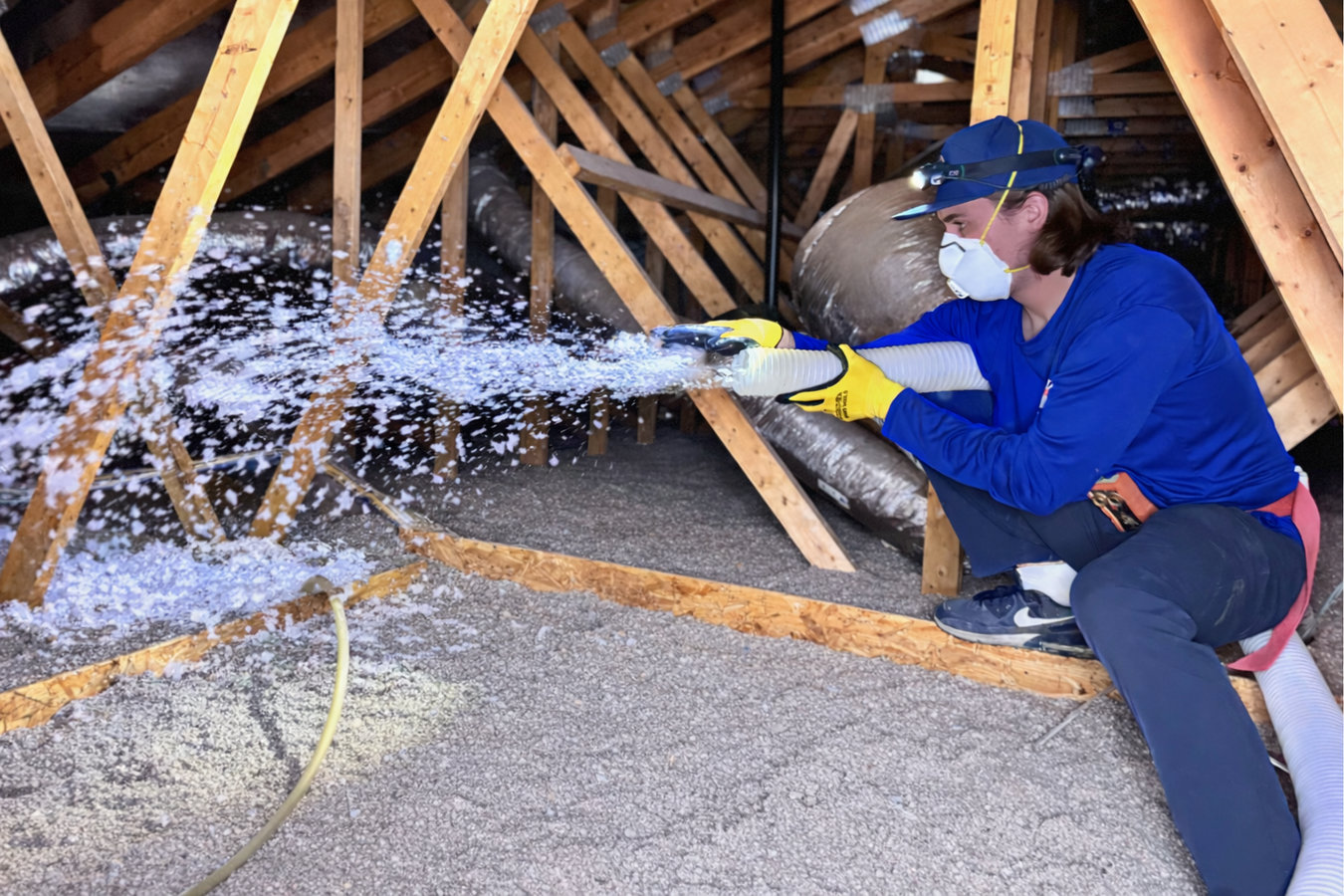
Attic insulation in Manhattan, KS slows heat movement between your living space and the outdoors - most jobs add blown-in or batt insulation to an existing attic in a single day without disrupting your routine. The problem with older homes is not always a lack of insulation - it is a combination of insulation that has settled and thinned over decades, and air leaks around pipes and fixtures that no amount of fluffy insulation can stop on its own. Heat escapes through those gaps just as fast as it escapes through thin insulation.
Most homes in Manhattan built before the 1990s fall below the insulation levels recommended for this climate zone. Manhattan summers regularly hit 95 degrees or hotter, and winters drop below 10 degrees - your attic insulation has to perform in both directions. If you have noticed that your upper floors feel like a different climate than the rest of your house, or that your HVAC system runs almost constantly, inadequate attic insulation is usually the place to start. If you also suspect air infiltration from below, pairing attic work with blown-in insulation gives you coverage throughout the whole envelope.
The federal government's ENERGY STAR recommended insulation levels for Kansas call for more attic insulation than most homes built before 1990 currently have. A contractor should measure what you currently have during their assessment and tell you plainly what it would take to bring it up to where it should be.
Manhattan's climate is demanding - genuinely hot summers and genuinely cold winters. If your bills feel dramatically higher than your neighbors' for a home of similar size, your attic insulation is a likely culprit. Heat rises in winter and presses down through a poorly insulated ceiling in summer, making your HVAC system work constantly to keep up.
If the upstairs bedrooms or rooms directly below the attic are always too hot in summer or too cold in winter - even when the rest of the house feels fine - that is a strong sign the attic above those rooms is not doing its job. This is especially common in older Manhattan homes where insulation was installed unevenly or has settled over decades.
If you peek into your attic with a flashlight and the wooden framing beams (joists) are visible above the insulation, you almost certainly do not have enough. Properly insulated attics in Kansas should have insulation deep enough that you cannot easily see the tops of those beams. This is a quick visual check anyone can do.
Many homes in Manhattan's established neighborhoods were built with insulation levels that made sense at the time but fall well short of what is recommended today. If you have lived in your home for years without having the attic checked, or if you bought an older home with unknown history, a professional assessment costs far less than what you are likely losing each month in energy bills.
We install both blown-in loose-fill and batt insulation, selecting the right type based on your attic layout and what is already there. Blown-in insulation fills corners and odd-shaped spaces more completely than batts and can be added on top of existing material in most cases. Batts work well in attics with clear, consistent joist spacing. In both cases, the critical first step - which many contractors skip - is sealing air leaks around light fixtures, pipe penetrations, and gaps in the attic floor before any new insulation goes in. Skipping that step means you are still paying for air you are not keeping, even after a new layer goes in.
For homeowners dealing with a heavily settled or damaged insulation layer, we also offer insulation removal before the new install. And for attics where air infiltration is the dominant problem, we can pair insulation work with attic air sealing for a complete solution that addresses both heat transfer and air movement at the same time.
Fills gaps and corners more completely than batts - best for attics with irregular shapes or existing material.
Pre-cut blankets that work well in attics with clear, consistent joist spacing and no existing insulation.
We seal gaps around pipes, fixtures, and framing before adding any insulation - the step that makes the biggest difference.
If existing insulation is wet, moldy, or contaminated, we remove it completely before the new layer goes in.
Manhattan sits in a climate zone that swings hard between hot and cold. Summer highs regularly hit 95 degrees and above, while winter lows can drop well below 10 degrees. That 100-degree seasonal range means your attic insulation is working in both directions - keeping heat out in July and holding warmth in January. Many homes in Manhattan's older neighborhoods - particularly those near Kansas State University and along the streets north and south of Poyntz Avenue - were built in the 1950s through 1970s with insulation levels that simply were not designed for this kind of performance. Add the persistent Kansas wind off the Flint Hills, which accelerates heat loss through any unsealed gap, and you have conditions where attic insulation upgrades consistently deliver real, measurable results.
We regularly serve homeowners in Emporia and Topeka who face the same combination of older housing stock and demanding Kansas climate. If you recently purchased an older home or a property that was previously a rental near the K-State campus, a professional attic inspection is a smart first step - rental properties in particular often have insulation that was never upgraded or that was damaged and never replaced.
We ask a few basic questions - age of the home, whether insulation has been upgraded before, and what has been prompting your concern. We respond within 1 business day and can often schedule a visit the same week.
A contractor comes out, checks your current insulation level, looks for air leaks around pipes and fixtures, and measures the area. This visit is free and takes less than an hour. You will receive a clear written estimate explaining exactly what will be done and why.
The crew seals any air leaks first, then adds the new insulation. If using blown-in material, you will hear equipment running - it is brief. You do not need to leave your home, but keeping pets and children clear of the work area is a good idea.
No curing time needed - your attic is ready immediately. The contractor walks you through what was done before leaving. Most homeowners notice the difference in comfort within a few days and see the impact on their energy bills in the next full billing cycle.
We respond within 1 business day - no obligation. After you submit, someone from our office will call to schedule a free on-site estimate at a time that works for you.
(785) 236-2287Every attic insulation project in Manhattan starts with a free written estimate covering the scope and cost. We document each step so you know exactly what was done.
Evergy, the utility serving Manhattan, has offered rebates for qualifying insulation upgrades. We are familiar with the rebate process and can help you determine eligibility before you commit to anything.
We seal air leaks around light fixtures, pipes, and gaps before adding any new insulation. Skipping this step is the most common shortcut in the industry - and it means you would still feel drafts even after paying for new insulation.
We come to your home, assess your actual attic conditions, and give you a written estimate before you decide anything. No pressure, no surprise add-ons on the invoice.
We work exclusively in Manhattan and the surrounding Kansas communities, which means we know the housing stock, the climate demands, and the utility rebate programs that apply here. Every job comes with a written estimate upfront and a walkthrough when the work is done - so you know exactly what you paid for.
Blown-in insulation is the most common method for adding attic coverage - it fills corners and gaps batts cannot reach.
Learn moreAir sealing the attic floor before adding insulation is the step that makes the biggest difference in drafts and energy savings.
Learn moreCall Manhattan Insulation for a free on-site estimate - the sooner your attic is upgraded, the less you pay on your next heating bill.