
Loading...
Serving Manhattan, KS and surrounding areas. (785) 236-2287
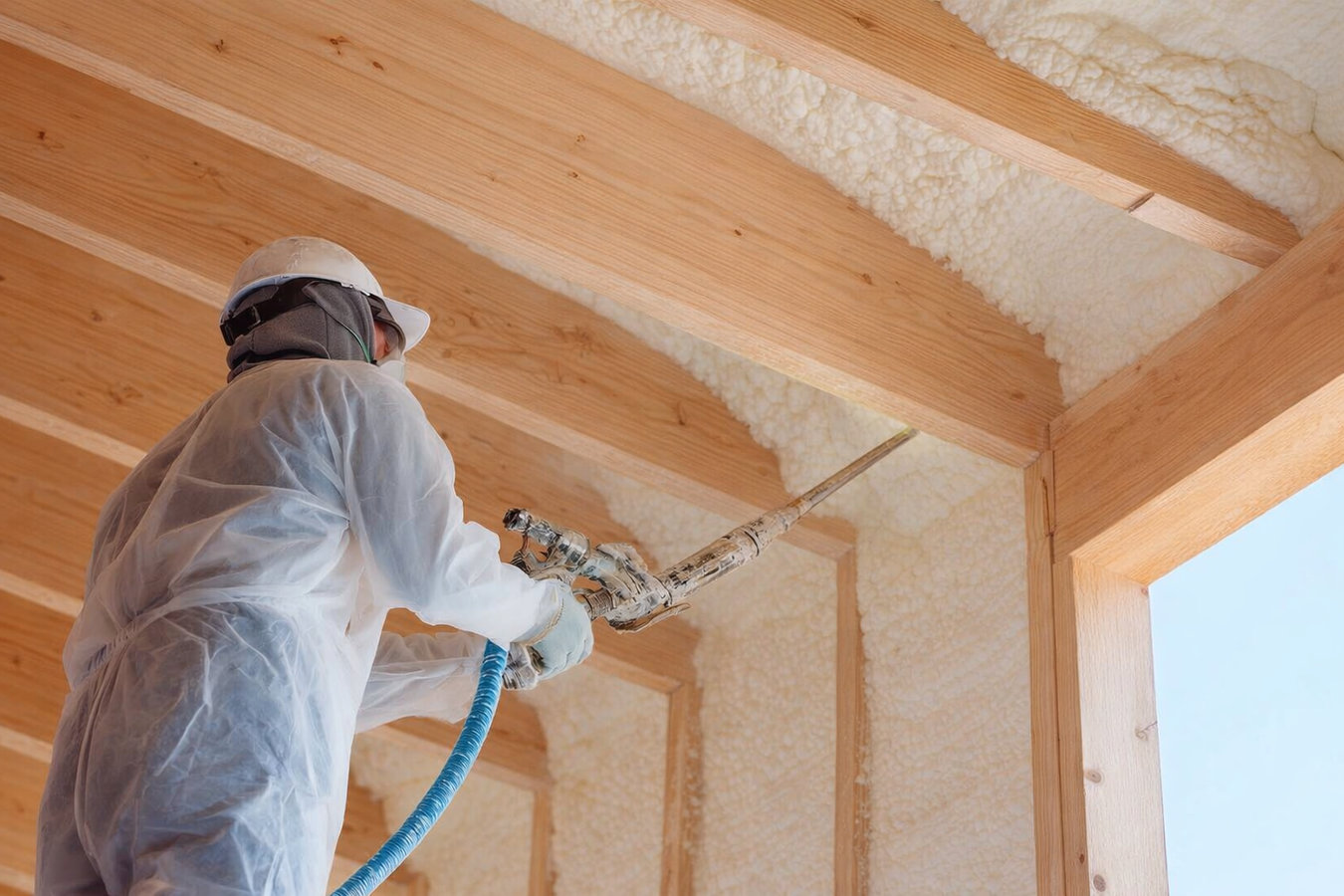
If your home loses heat in January and bakes in July, spray foam insulation seals the gaps that other insulation types leave behind - giving you a more comfortable home and lower energy bills year-round.
Spray foam insulation in Manhattan, KS combines insulation and air sealing in a single application - most residential jobs cover a crawl space and attic rim joists in one to two days. Unlike fiberglass batts, which slow heat transfer but leave gaps around pipes and framing, spray foam expands on contact and hardens into a continuous seal. That matters in a climate like Manhattan's, where Kansas wind drives cold air through any opening it can find.
There are two types: open-cell foam for attics and interior walls, and closed-cell foam for crawl spaces and moisture-prone areas. Many Manhattan homes benefit from both - open-cell in the attic for air sealing and sound control, and closed-cell along the crawl space walls and rim joists where humidity is a real concern. If you are also dealing with an under-insulated attic floor, pairing spray foam with attic insulation gives you comprehensive coverage from above and below.
The Department of Energy estimates that air sealing alone can cut heating and cooling costs by 10 to 20 percent in a typical home. For a Manhattan house built before 1980 - where rim joists, crawl spaces, and attic knee walls are often completely uninsulated - the savings are often at the higher end of that range.
If your gas or electric bill jumps dramatically when Kansas temperatures drop in December and January, your home is likely losing heat faster than it should. Manhattan winters are cold enough that even a modest air leak at the rim joist or in an uninsulated crawl space forces your furnace to run nearly constantly. If your bills feel out of proportion to how cold it actually got, poor insulation is usually the first place to look.
Walk through your home on a cold, windy Kansas day and pay attention to your ankles. Drafts near the floor - especially in rooms above a crawl space or basement - are a sign that cold air is entering from below. This is especially common in older Manhattan homes where the crawl space is uninsulated and open to outside air.
If the second floor of your home feels significantly warmer than the first floor during a Kansas summer, heat is likely entering through an under-insulated attic. Spray foam applied to the underside of the roof deck can dramatically reduce that heat transfer and make your whole home more comfortable without running the air conditioner harder.
If you can see light coming through gaps around pipes, wires, or where the framing meets the foundation in your attic or crawl space, outside air is moving freely into your home. This is one of the clearest signs that air sealing - which spray foam provides - would make a real difference in your comfort and energy bills.
We install both open-cell and closed-cell spray foam depending on where the work is happening and what problem we are solving. For attics and interior wall cavities, open-cell foam seals air gaps while adding insulation and sound dampening. It is the right call for interior spaces where moisture control is not the primary concern. For crawl spaces, basement rim joists, and any area where Kansas humidity or potential water exposure is a factor, we use closed-cell foam - which is denser, harder, and also acts as a vapor barrier.
Many of the best spray foam projects in Manhattan combine both types. We seal the crawl space walls and rim joists with closed-cell foam insulation to handle moisture, then address the attic with the appropriate material for that space. The result is a home that holds its temperature, stays drier, and costs less to heat and cool - all from one project.
Best for attics and interior walls where sound dampening and air sealing are the priorities.
Best for crawl spaces, basement walls, and moisture-prone areas that need a vapor barrier.
The band of framing just above your foundation is one of the most common air leak points in older homes.
A conditioned crawl space stays drier, prevents floor cold spots, and protects your home long-term.
Manhattan sits at the edge of the Flint Hills, where winters regularly drop below 10 degrees and summers push past 100. That 90-plus degree seasonal swing puts real stress on your home's ability to hold conditioned air. Kansas is also one of the windiest states in the country, and wind-driven air infiltration - outside air pushed through gaps by wind pressure - is a bigger problem here than in calmer climates. Spray foam is one of the few insulation types that directly addresses this, because it seals the gaps rather than just slowing heat transfer through a material.
Older homes near downtown Manhattan and the Kansas State campus - many built in the 1940s through 1970s before modern energy codes - often have completely uninsulated rim joists and open crawl spaces. These are the highest-payback spots for spray foam. Homeowners in Junction City and other surrounding communities with similar housing stock see the same patterns. Manhattan's humid summers also mean crawl spaces that breathe outside air are pulling moisture into your home continuously - closed-cell foam applied to crawl space walls stops that cycle.
We ask a few quick questions about your home and what you are noticing. Most Manhattan homeowners can schedule an on-site visit within a few days. We respond to all inquiries within 1 business day.
A contractor walks through your attic, crawl space, or walls and takes measurements. You receive a written estimate breaking down the area, foam type, and total cost - before any commitment.
The crew arrives, seals off the work area, and begins spraying. Most residential jobs take one to two days. You will need to be out of the home during spraying and for at least 24 hours afterward.
After curing, we walk you through the finished work and confirm everything looks right before we leave. You get a clear picture of exactly what was done and what to expect going forward.
We respond within 1 business day - no obligation. After you submit, someone from our office will call to schedule a free on-site estimate at a time that works for you.
(785) 236-2287Every job we take in Manhattan starts with a free written estimate covering the scope and cost. We document each step so you can see exactly what was done on your property.
We come to your home, assess the actual conditions, and give you a written estimate before you decide anything. No pressure, no surprise charges after the fact.
We work exclusively in the Manhattan area and surrounding Kansas cities. We know the housing stock, the climate, and what it takes to do this work right in Flint Hills conditions.
Spray foam is one of the few insulation types that addresses air infiltration directly - the kind of air leakage that Kansas wind drives through gaps no batt or blown-in material can stop.
Every job comes with a final walkthrough where we show you exactly what was done and where the foam was applied. The Spray Polyurethane Foam Alliance recommends homeowners always ask to see the finished work before the crew leaves - and we make that standard on every job.
Pair spray foam at the rim joists with full attic insulation to eliminate heat loss from above and below at the same time.
Learn moreLearn more about the denser foam type recommended for crawl spaces and moisture-prone areas in Kansas homes.
Learn moreCall Manhattan Insulation today for a free on-site spray foam estimate - the sooner you schedule, the sooner you stop paying for air you are not keeping.