
Loading...
Serving Manhattan, KS and surrounding areas. (785) 236-2287
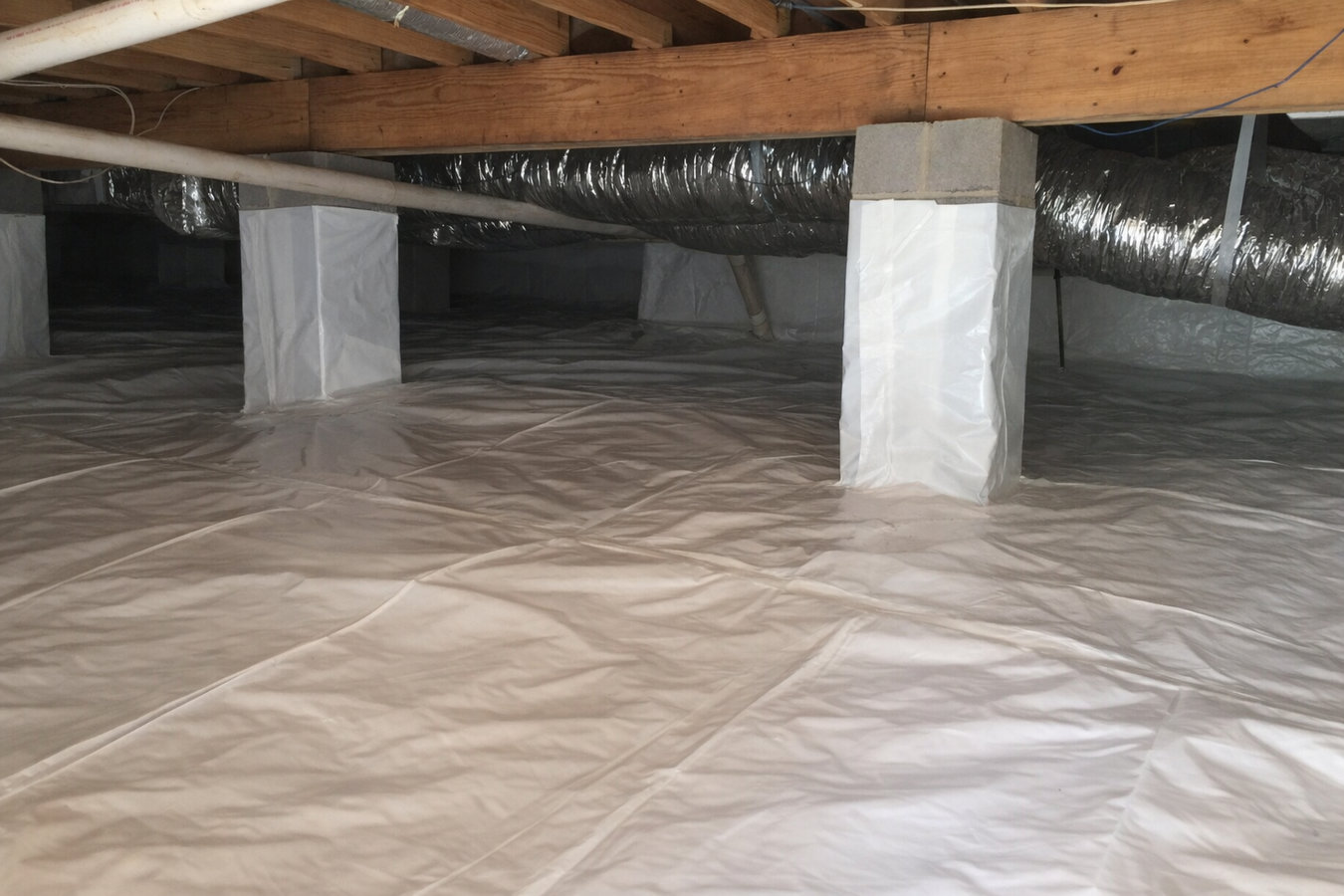
Ground moisture rising through an unprotected crawl space warps floors, grows mold, and raises energy bills. A properly installed vapor barrier stops it at the source.
Crawl space vapor barrier installation in Manhattan, KS blocks ground moisture from rising into your home structure - most jobs cover a standard crawl space floor in a single day. The barrier is heavy-gauge plastic sheeting laid across the exposed dirt, overlapped at the seams, taped closed, and secured to the foundation walls so moisture has nowhere to bypass it.
Without a barrier, the soil under your home releases moisture constantly - more so in Manhattan where the Flint Hills clay soils hold water for weeks after spring rains. That moisture works its way up into floor joists, subfloor wood, and eventually your living spaces. Musty odors, soft floors, and condensation on ductwork are all signs this process is already underway.
For homes where moisture problems are more severe, combining a vapor barrier with crawl space insulation addresses both moisture and thermal performance at the same time - a worthwhile combination for older Manhattan homes that have never had either done.
If your home develops a damp, earthy odor between March and June, that smell is almost always rising from your crawl space. Manhattan's clay soils stay wet for weeks after spring rains, and an unprotected dirt floor releases that moisture as vapor. The odor will return every spring until the source is sealed.
Walk slowly across your hardwood or laminate floors and notice any spots that feel softer or slightly bouncy. This is a sign that crawl space moisture has been working on the wood from below for months or years. In older Manhattan homes built before 1980, this kind of damage is one of the most common signs of a missing or failed vapor barrier.
If you look into your crawl space and see water droplets forming on metal pipes, duct connections, or insulation, humidity down there is high enough to cause condensation. Even small amounts of visible moisture are a warning that the crawl space soil is releasing vapor with no barrier to stop it.
Moisture in your crawl space makes your home harder to heat and cool - damp air holds temperature differently than dry air, and your HVAC system has to work harder as a result. If your bills have risen without a clear reason and your mechanical systems check out fine, crawl space moisture may be contributing to the increase.
We install crawl space vapor barriers sized and specified for the conditions we find on-site. For most Manhattan homes, a standard heavy-gauge polyethylene barrier covering the entire floor with fully sealed seams is the right solution. We recommend 10- to 20-mil material - thick enough to resist puncture from debris or occasional foot traffic and rated to last 15 to 25 years in a Flint Hills climate.
For homes with more persistent moisture - particularly those close to Wildcat Creek or the Blue River floodplain - we can extend coverage up the foundation walls and discuss whether adding vapor barrier installation in other areas of the home makes sense. We also pair barrier work with crawl space cleanup and assessment so you have a clear picture of the full condition before we leave.
Best for most Manhattan homes - heavy-gauge polyethylene sheeting covering the entire crawl space floor with sealed seams.
Suitable for homes with elevated moisture where the barrier also runs up the foundation walls for more complete protection.
Ideal for older homes where both moisture control and thermal performance beneath the floors need to be addressed together.
For homeowners who want a professional assessment of the crawl space condition before committing to any specific work.
Manhattan sits in a humid continental climate where spring rainfall is significant and summer humidity climbs above 70 percent for weeks at a time. The Flint Hills clay soils in and around the city hold onto that rain for far longer than sandy or loam soils would - meaning the ground under your crawl space stays wet and keeps releasing moisture upward well into summer. For homes built before the 1990s - especially those near the Kansas State campus and the older streets around downtown Manhattan - vapor barriers were not a standard feature, and many crawl spaces have bare dirt floors that have been absorbing and releasing ground moisture for decades.
The pattern is also seasonal in a way that catches homeowners off guard. The musty smell arrives every April, the soft floor spot gets a little worse each year, and the energy bills creep up without an obvious explanation. Scheduling vapor barrier work in late winter or early fall - before spring moisture season fills contractor calendars - means shorter wait times and protection in place before the wettest stretch of the year. Homeowners in Junction City and nearby communities face the same Flint Hills clay-soil conditions and benefit from the same approach.
We ask a few quick questions about your home - size, age, and any moisture symptoms you have noticed. We respond to all inquiries within 1 business day and can usually schedule a site visit within a few days.
A contractor enters your crawl space through the access hatch, measures the area, checks for moisture damage or existing barriers, and notes anything that could affect the job - low clearance, debris, or standing water. This visit is free and takes 30 to 60 minutes.
You receive a written quote that breaks down labor and material costs, specifies what thickness of barrier is recommended, and confirms whether any permits are needed. No pressure to decide on the spot.
The crew lays and seals the barrier in one day for most homes. Before leaving, we walk you through the finished crawl space so you can see the coverage and confirm the work is done correctly.
We respond within 1 business day and provide a written estimate at no cost. No pressure, no obligation.
(785) 236-2287We have worked on homes throughout Manhattan and Riley County and understand the clay-soil moisture conditions that affect crawl spaces here. That local knowledge shapes what materials we recommend and how we approach each job.
You get a detailed written quote - specifying material thickness, coverage area, and total cost - before any work begins. No verbal estimates, no surprise charges after the fact.
For standard Manhattan homes, a vapor barrier installation is typically a single-day job. You stay home while the crew works entirely in the crawl space, and we clean up completely before we leave.
A correctly installed vapor barrier is visible - every inch of dirt covered, seams taped, edges secured to the walls. We invite you to look before we leave, and you can check it yourself with a flashlight anytime.
We have installed vapor barriers in Manhattan homes ranging from older pre-1960 properties near Aggieville to newer builds on the northwest side, and we understand the soil and moisture conditions specific to Riley County. The Insulation Contractors Association of America sets installation best practices we follow on every job - so the work you get is measured against a standard, not just our word.
For permit requirements in Manhattan, KS, see the City of Manhattan Building Inspection Division. The U.S. Department of Energy moisture control guide explains why vapor barriers are among the most cost-effective home improvements available.
Learn how vapor barrier installation extends moisture protection to basement floors and foundation walls beyond the crawl space alone.
Learn moreAdd insulation to your crawl space walls alongside the vapor barrier to address both moisture control and thermal performance in one project.
Learn moreManhattan contractor schedules fill fast once the rains begin - contact us now for a free estimate and lock in your installation date.