Loading...
Serving Manhattan, KS and surrounding areas. (785) 236-2287
Most Manhattan homes built before 1990 do not have enough insulation for today's energy standards - and the difference shows up on your Evergy bill every single month. Retrofit insulation adds what is missing without tearing out your walls or disrupting your household.
Retrofit insulation in Manhattan, KS means adding insulation to a home that is already built and occupied - without demolition, without moving out, and most jobs finish in a single day. Contractors work through small access holes or existing attic hatches to get material into the spaces that need it most: the attic floor, wall cavities, and the floor above unheated crawl spaces. You stay in your home throughout and pick up your normal routine the same day.
The most common materials used are blown-in loose-fill for attics and wall cavities, and spray foam for rim joists and air-leak points. The right approach depends on where the work is happening and what problem you are solving. Many Manhattan homeowners pair retrofit insulation with a full home insulation assessment to understand exactly which areas need attention before committing to a scope of work.
The Department of Energy recommends attic insulation between R-49 and R-60 for homes in Climate Zone 5, which covers Manhattan. Most homes built before the 1990s have a fraction of that. Checking your current R-value is the first step - and it takes about five minutes once a contractor is in your attic. See the ENERGY STAR R-value recommendations by climate zone for context on what your home should have.
If your energy bills feel out of proportion to your home size - especially during a Kansas winter or a July heat wave - under-insulation is one of the most common causes. Your heating and cooling system is working harder than it needs to compensate for heat loss in winter and heat gain in summer. This is one of the clearest signs that adding insulation would pay for itself over time.
If one bedroom is always colder than the rest of the house in winter, or a room above the garage is unbearably hot in summer, insulation in that part of your home is likely thin or missing entirely. In older Manhattan homes built in the 1960s and 1970s, wall insulation was often installed inconsistently or skipped in certain sections. Uneven comfort from room to room is a reliable signal that something is off.
Hold your hand near an electrical outlet or light switch on a wall that faces outside. If you feel a draft or a noticeable chill, air is moving through the wall cavity - which means the insulation there is absent, settled, or has gaps. This is especially common in Manhattan's older housing stock, where wall insulation was never installed or has compressed over decades.
If your home was built before 1990 and you have no record of insulation work being done, there is a strong chance it does not meet current recommendations for Climate Zone 5. Insulation standards have changed significantly over the past few decades. A quick attic check or a free contractor assessment can tell you exactly where you stand - usually within the first 30 minutes of someone looking.
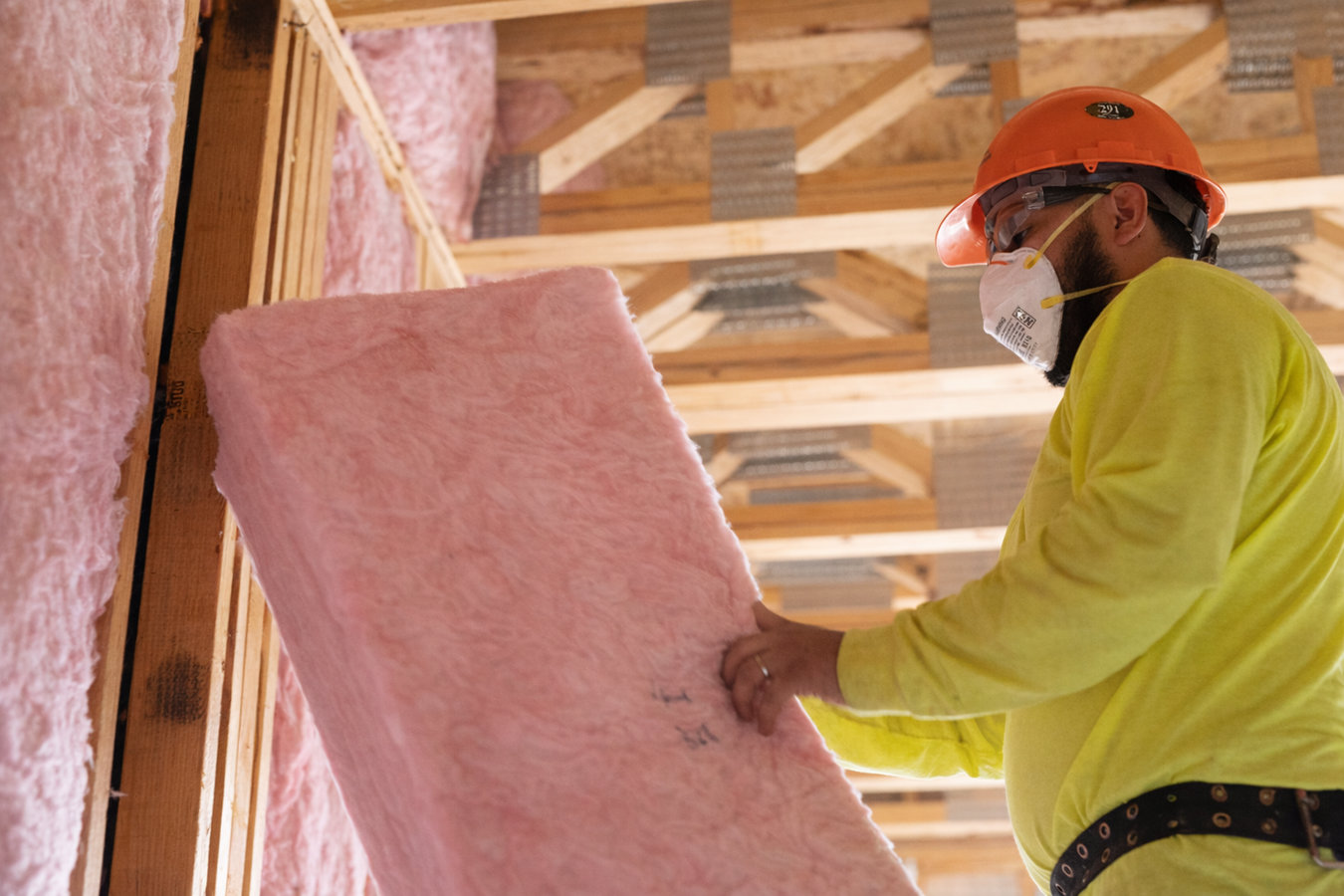
For attic work, we set up a blowing machine, run a hose through your attic hatch, and fill the space to the target depth - evenly, with depth markers left across the floor so you can verify coverage yourself. We always seal air gaps before blowing insulation on top of them, because insulation alone cannot stop air from moving through gaps. Pairing blown-in insulation with air sealing is what separates a thorough job from one that just adds material over existing problems.
For wall insulation, we drill small access holes - typically about the size of a golf ball - in an inconspicuous location, inject the material, and patch and sand the holes before we leave. The result is ready to paint within a day or two. If the project also calls for spray foam at rim joists or crawl space walls, we coordinate all of it under one quote, so you are not managing multiple contractors. For homes that need a complete envelope upgrade, spray foam insulation handles air sealing and insulation in one pass at the rim joists and crawl space.
Best for under-insulated attics in older Manhattan homes - fills the space evenly and brings the R-value up to Climate Zone 5 recommendations.
Right for homes with little or no wall insulation - material is injected through small holes that are patched and sanded before the crew leaves.
Addresses the framing just above your foundation - one of the highest-payback spots in older Manhattan homes where heat loss is direct and significant.
The most complete approach for homes that have never been addressed - seal the gaps first, then add insulation to the correct depth for lasting results.
Manhattan sits in DOE Climate Zone 5, a rating that calls for significantly more attic insulation than what most pre-1990 homes actually have. The city also experiences some of the widest temperature swings in the region - summers above 95 degrees and winters that regularly drop below zero - meaning your insulation has to work hard in both directions all year. A home that was adequate in 1975 is losing real money on every utility bill by today's standards. A large share of the housing stock nearest the Kansas State University campus falls exactly in this category: well-built homes that simply predate modern energy requirements.
Homeowners in established Manhattan neighborhoods near Aggieville and Bluemont, and those in Junction City with similar-era housing, consistently see among the largest improvements from retrofit insulation work - because there is simply more room to improve. Evergy also offers rebates for qualifying insulation upgrades, and the federal Inflation Reduction Act tax credit covers a percentage of the project cost. Checking both programs before scheduling can make a real difference in what you pay.
We ask a few basic questions about your home's age and what you are noticing. There is no cost to have someone come out and take a look. We respond to all inquiries within 1 business day.
A contractor walks through your home - including the attic and any crawl space - to measure existing insulation and identify where the biggest gaps are. You get a written estimate before agreeing to anything. This visit takes 30 to 60 minutes.
The crew arrives with their blowing equipment and gets to work. For attic jobs, hoses run through the hatch and you can be home the entire time. For wall work, small access holes are drilled, filled, and patched before the crew leaves. Most jobs finish in a single day.
Before leaving, we walk through the results with you. In the attic, depth markers show the insulation reached the right level. We provide any paperwork you need for an Evergy rebate or federal tax credit claim.
Free in-home estimate. Written quote before any work starts. No obligation and we respond within 1 business day.
(785) 236-2287Every job we take in Manhattan starts with a free written estimate covering the scope and cost. We document each step so you can see exactly what was done on your property.
We work in Manhattan and surrounding Riley County communities. We know the local housing stock - particularly the pre-1990 homes near Kansas State University that are most likely to need this work.
We know how to document retrofit insulation work so it qualifies for Evergy rebates and the federal Inflation Reduction Act tax credit. Most homeowners who skip this step leave real money unclaimed.
After every attic insulation job we leave depth markers across the floor so you can verify the coverage yourself. You should never have to take a contractor's word that the work was done right.
Retrofit insulation is one of the highest-return upgrades available to Manhattan homeowners who own pre-1990 homes - and it is far less disruptive than most people expect. The North American Insulation Manufacturers Association (NAIMA) sets industry standards for installation quality that guide how thorough contractors approach coverage, air sealing, and depth verification. We follow those standards on every job.
Spray foam handles air sealing and insulation in one pass - the right choice for rim joists, crawl spaces, and areas where moisture is a concern.
Learn moreA full-home insulation assessment covering attic, walls, and floors to identify every area where your Manhattan home is losing heat or gaining it.
Learn moreManhattan winters arrive fast - get your home ready now and stop paying for heat that escapes through your attic and walls. Call or request a free estimate today.