
Loading...
Serving Manhattan, KS and surrounding areas. (785) 236-2287
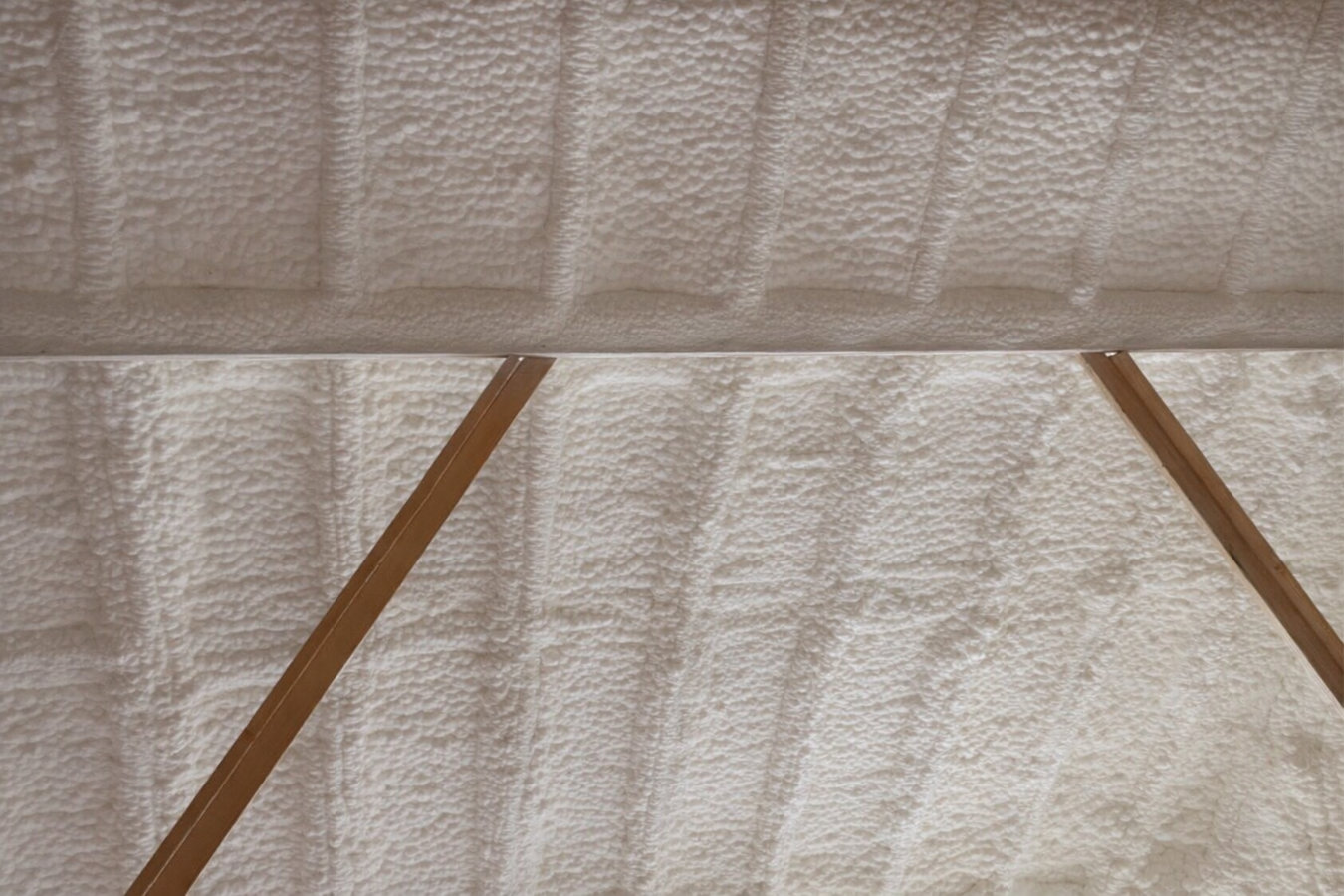
Stop paying for heat that escapes through gaps. Open-cell foam insulation seals every crack in your attic and walls, cuts drafts from Kansas wind, and makes your home quieter - in one installation.
Open-cell foam insulation in Manhattan, KS fills every gap, crack, and irregular corner in your attic and walls - most residential attic jobs are completed in one to two days. Unlike fiberglass batts, which leave gaps around wires, pipes, and framing, open-cell foam expands up to 100 times its original size and creates a continuous air seal. That air barrier is what stops Kansas wind from pushing cold air through your walls on a January night.
Open-cell foam is the softer, more affordable of the two spray foam types, and it performs exceptionally well in attics, interior walls, and any space where sound absorption is a bonus. It is particularly effective in older Manhattan homes built in the 1950s through 1970s, where irregular framing and decades of settling have created gaps that standard insulation simply cannot reach. For moisture-prone areas like crawl spaces and basement walls, pairing open-cell with spray foam insulation in a combined approach covers both ends of the problem.
The U.S. Department of Energy estimates that air sealing and insulation together can cut heating and cooling costs meaningfully in homes that currently have gaps and under-performing insulation. In a Manhattan home with no attic air sealing and compressed old batts, that difference shows up fast on your utility bills after the first full heating season. Learn more from the U.S. Department of Energy.
If your gas or electric bill has crept up year after year with no change in habits, poor insulation is one of the most common causes. In Manhattan's climate - with hot summers and cold winters - an under-insulated home forces your HVAC to run longer than it should, and you pay for it every month.
Kansas wind is persistent, and in older Manhattan homes it finds its way in through gaps around electrical outlets on exterior walls, around the attic hatch, and at rim joists. If you hold your hand near an outlet on a windy day and feel cool air, your home's air barrier has gaps that standard insulation cannot stop - but spray foam can.
When one part of your home never reaches a comfortable temperature no matter how long the heat or air conditioning runs, that area is almost certainly losing conditioned air. This is common in additions, finished attics, and rooms over garages in older Manhattan homes - areas that were often never properly sealed during construction.
If you peek into your attic and the insulation looks flat and thin, or you can see the tops of the ceiling joists, the insulation has settled or was never adequate. Homes built before the 1980s in Manhattan were insulated to standards well below what is recommended today, and upgrading is one of the most cost-effective improvements available.
We install open-cell spray foam in attics, interior wall cavities, and rim joists throughout Manhattan and the surrounding area. For most attic projects, open-cell is the right choice - it provides a thorough air seal, adds thermal resistance, and the soft texture absorbs sound in a way that fiberglass and blown-in materials do not. For homeowners near the K-State campus or Aggieville who deal with street noise or neighborhood activity, that sound-dampening quality is a real benefit.
Many of our best projects combine open-cell and closed-cell foam in a single visit. Open-cell goes in the attic and interior walls, while commercial insulation and closed-cell approaches handle moisture-sensitive zones in the crawl space and basement. This combined strategy is especially effective in Manhattan homes that have never been properly air-sealed - you fix the drafts, the heat loss, and the humidity issues in one project. The Spray Polyurethane Foam Alliance outlines what a quality installation looks like if you want a reference before you talk to contractors: sprayfoam.org.
Best for attic floors and cathedral ceilings where air sealing and sound control are the priority.
Suits new construction or gut-renovation projects where walls are open and noise reduction matters.
Targets one of the highest heat-loss points in older Manhattan homes - the band of framing above the foundation.
Pairs open-cell in the attic with closed-cell in the crawl space for comprehensive whole-home performance.
Manhattan, KS sits in a climate zone that sees summer highs above 95 degrees and winter lows that can fall below zero. That roughly 100-degree seasonal swing pushes any home's insulation to its limits. Kansas is also one of the windiest states in the country, and Manhattan's position at the edge of the Flint Hills means homes here face sustained winds that drive air through gaps that other insulation types leave unsealed. Open-cell foam addresses this directly by creating a continuous air barrier - not just slowing heat transfer, but stopping air movement at the source. Homeowners in Manhattan often notice drafts near outlets, around attic hatches, and along exterior walls that are out of proportion to the outside temperature - a clear sign of air infiltration.
Manhattan also has a significant share of older housing near the K-State campus and downtown - homes built in the 1950s through 1970s when insulation standards were far lower than they are today. These homes tend to have irregular framing, old plumbing and wiring penetrations, and settled or compressed existing insulation that leaves large gaps. Open-cell foam is particularly effective in these buildings because it conforms to whatever shape it encounters. Homeowners in Junction City and nearby communities with similar housing stock face the same conditions - and the same payback when air sealing is done right.
We ask a few quick questions about your home and what you are noticing. Most Manhattan homeowners can schedule an on-site visit within a few days. We reply to all inquiries within 1 business day.
A contractor walks through your attic, crawl space, or walls and takes measurements. You receive a written estimate before any commitment, covering area, foam type, thickness, and total cost.
Clear the work area and plan to leave with your pets for at least two to four hours after spraying begins. The crew protects surrounding surfaces, then applies foam in passes that expand and firm within seconds.
After trimming and cleanup, we walk you through the finished work. Open-cell foam reaches full strength within 24 hours. Most homeowners return the same evening. We address any concerns at no extra charge.
Free written estimate. No obligation. We reply within 1 business day.
(785) 236-2287Every job in Manhattan starts with a free written estimate covering the scope and cost. We document each step so you can see exactly what was done on your property.
We work in Manhattan and surrounding Kansas cities. We know the housing stock, the climate zone requirements, and what Flint Hills wind conditions demand from insulation.
We walk your space, assess actual conditions, and hand you a written quote before you commit to anything. No vague ballpark figures, no surprises on the final invoice.
Open-cell spray foam in an existing home typically qualifies for the Inflation Reduction Act energy efficiency tax credit. We provide the manufacturer certification statement you need to file the credit.
We combine local knowledge of Manhattan homes with experienced crews so you get insulation that performs in this specific climate. Every project comes with a walkthrough at completion so you can see exactly what was done.
Open-cell foam is one of several insulation types we install for commercial buildings, offices, and rental properties in Manhattan.
Learn moreSee the full picture of spray foam options - including how open-cell and closed-cell foam work together in a complete insulation project.
Learn moreKansas winters are hard on under-insulated homes - book your on-site assessment now before the next cold snap hits.