
Loading...
Serving Manhattan, KS and surrounding areas. (785) 236-2287
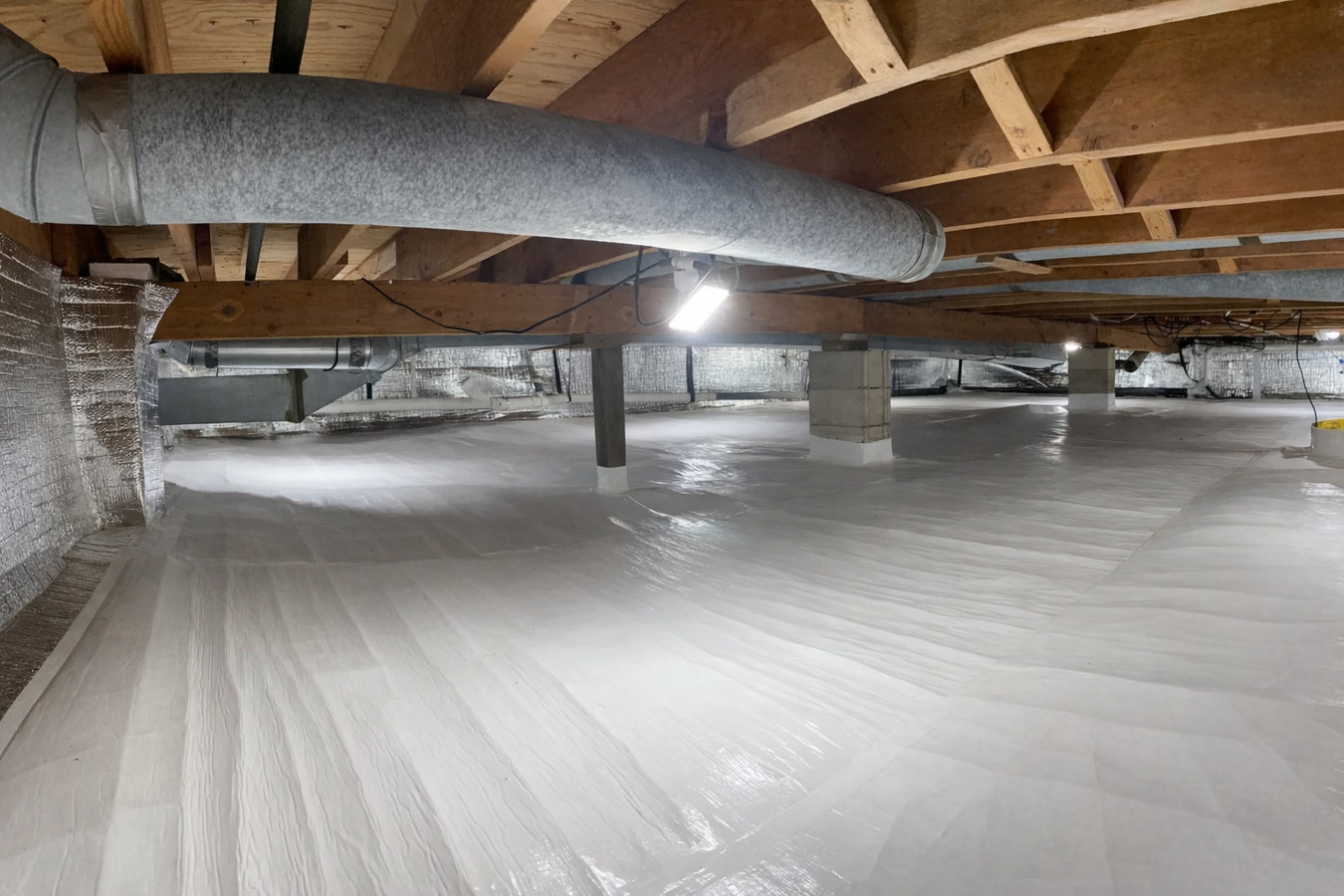
Cold floors in winter, musty smells, and rising energy bills are all signs your crawl space needs attention. We insulate and moisture-seal so your home stays comfortable year-round.
Crawl space insulation in Manhattan, KS slows heat loss through your floors, controls moisture from below, and protects your plumbing from hard freezes - most residential jobs are completed in one day and require no major structural work. Contractors install material between the floor joists above the crawl space or along the foundation walls depending on whether the space is vented or sealed.
The problem most Manhattan homeowners notice first is cold floors in winter - but the crawl space affects your home year-round. In summer, ground moisture rising through an unprotected crawl space brings humidity into your living areas and can cause musty odors that no amount of air freshener fixes. In winter, an uninsulated crawl space lets subzero Flint Hills temperatures pull warmth directly out of your floors, forcing your furnace to run harder than it should. Manhattan homes built before the 1980s are especially likely to have crawl spaces that were either poorly insulated at the start or have deteriorated since.
Many crawl space projects also benefit from a vapor barrier over the ground to block moisture at the source. If you are also dealing with moisture issues along the foundation walls or in wall cavities, pairing crawl space work with wall insulation gives you a more complete solution.
If your kitchen or living room floor feels noticeably cold in January, heat is escaping through the floor into the crawl space below. Manhattan winters bring extended stretches of below-freezing temperatures, and a crawl space with little or no insulation lets that cold air directly affect your floors. This is one of the most common and most noticeable signs that your crawl space needs attention.
A persistent musty odor - especially in rooms closest to the floor or near the crawl space hatch - often means moisture is building up below and working its way into your living space. Given Manhattan's clay-heavy soils and humid summers, ground moisture has an easy path upward if the crawl space is not properly sealed. If the smell gets worse after rain or in summer, the crawl space is likely the source.
If you have looked into your crawl space and seen insulation hanging down, visibly wet or stained, or covered in mold or mildew, it is no longer doing its job. Insulation in that condition can make things worse by trapping moisture against the wood structure above it. This is especially common in Manhattan homes built before the 1980s where original insulation has simply reached the end of its useful life.
If a plumber has ever told you that pipes in your crawl space froze or were at risk during a cold snap, the space is not insulated well enough to protect your plumbing. Manhattan winters can bring multi-day stretches well below freezing. Proper insulation combined with air sealing around gaps is the most reliable way to prevent this from happening again.
We work with both vented and sealed crawl spaces, choosing the approach that fits how your home is built and what problems you are trying to solve. For vented crawl spaces, insulation goes between the floor joists - we remove any old material that is damaged or contaminated, address moisture issues, and install fresh material at the R-value recommended for Kansas Climate Zone 5. For sealed crawl spaces, insulation goes on the foundation walls rather than the floor joists above, turning the space into a semi-conditioned area that holds temperature more consistently.
Moisture control is part of every crawl space job we do in Manhattan. The clay-heavy soils in Riley County hold ground moisture and release it slowly, which means the space under your home stays damp longer than you might expect. We recommend pairing insulation with a crawl space vapor barrier over the ground in most cases - without it, even good insulation can degrade faster than it should.
Best for vented crawl spaces where the goal is slowing heat loss from the living area above.
Right for homes where the crawl space will be fully encapsulated - insulation goes on the walls, not the joists.
Essential in Manhattan's clay-soil conditions - blocks ground moisture before it can work against your insulation.
For crawl spaces where existing material is sagging, wet, or pest-damaged and needs to come out first.
Manhattan sits in a climate zone that pushes hard in both directions - winters regularly drop below freezing for extended stretches, and summers bring high heat with significant humidity. Your crawl space is fighting two different battles: keeping cold air from chilling your floors in January and keeping summer ground moisture from soaking into your home's structure in July. The clay-heavy soils common in Riley County make the moisture battle harder than in areas with drier or sandier ground - clay holds water and releases it slowly, so the ground under your home stays damp long after a rain event.
A large portion of Manhattan's housing stock - particularly neighborhoods close to the K-State campus and in areas like Aggieville - was built in the 1940s through 1970s with minimal crawl space insulation or none at all. Homeowners in Manhattan and nearby Junction City with older homes are often surprised to find either very little insulation or material that is essentially doing nothing at this point.
We ask about your home's age, whether you have noticed specific problems, and when you are available. Most Manhattan homeowners can get a visit scheduled within a few days. We reply to all inquiries within 1 business day.
A contractor physically enters the crawl space, checks moisture levels, looks at existing insulation and wood structure, and measures the space. You get a plain-language explanation of what was found and a written estimate before any commitment.
The crew removes any old material that needs to come out, addresses moisture issues in scope, and installs the new insulation. Most jobs are completed in a single day. You do not need to be present the entire time, but someone should be home.
Before leaving, the crew walks you through what was done, provides photos of the completed work if you cannot easily access the space, and explains what to watch for going forward. If a permit was pulled, the city inspector visit is coordinated for you.
Free on-site estimate. No obligation. We reply within 1 business day.
(785) 236-2287Every crawl space job we take in Manhattan starts with a free written estimate covering the scope and cost. We document each step so you can see exactly what was done.
Clay-heavy soils in the Manhattan area hold moisture long after rain. We assess ground moisture conditions before installing anything and recommend a vapor barrier when the soil warrants it - which is most of the time here.
We work in Manhattan and the surrounding Flint Hills communities. We know the older homes near the K-State campus, the rental properties near Fort Riley, and what insulation conditions look like in a 1960s crawl space.
When a permit is required, we pull it and coordinate the city inspection. Permitted and inspected work protects your home's value and gives you documentation that the job was done to code - which matters when you sell.
The U.S. Department of Energy recommends specific insulation levels for crawl spaces in Kansas based on the climate zone - we install to those standards so your home performs the way it should through both a Flint Hills winter and a Kansas summer.
Complete the thermal envelope by insulating exterior walls - often the next step after a crawl space project in older Manhattan homes.
Learn moreAdd a ground moisture barrier to protect your new crawl space insulation from the damp Riley County soil beneath it.
Learn moreLate summer and early fall are the best time to get this work done - contact us now and go into winter with warmer floors and a healthier crawl space.