
Loading...
Serving Manhattan, KS and surrounding areas. (785) 236-2287
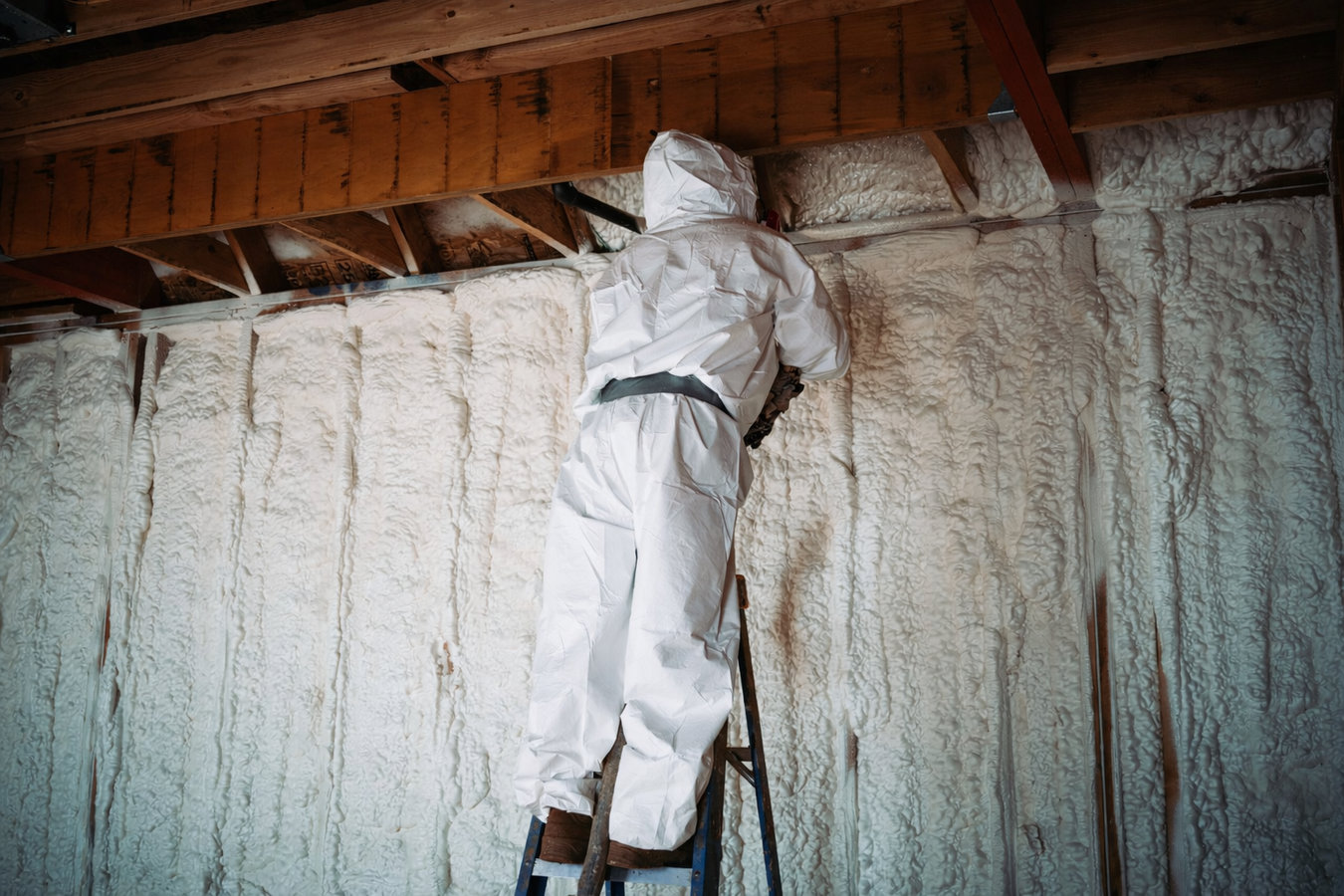
Standard insulation slows heat. Closed-cell foam stops air and moisture too. For crawl spaces, basement walls, and rim joists in a Kansas climate, there is no better combination in a single material.
Closed-cell foam insulation in Manhattan, KS combines insulation, air sealing, and moisture resistance in a single application - most residential jobs covering a crawl space or basement take one to two days and hold up for decades without sagging or settling. Unlike fiberglass batts or loose-fill, closed-cell foam is a two-part liquid that a contractor sprays directly onto the surface, where it expands and hardens into a firm, dense layer. It bonds to the surface and stays put. Per inch, it delivers one of the highest insulating values of any material available to homeowners today, which matters in a climate where your home faces both below-zero Kansas winters and 95-degree summers.
What separates it from its counterpart, open-cell foam insulation, is density and moisture resistance. Closed-cell foam is harder, denser, and also acts as a vapor barrier - making it the right call for crawl spaces, basement walls, and rim joists where Kansas humidity and Riley County clay soils push moisture toward your home. For attics and interior walls where moisture is less of a concern, open-cell foam is a capable alternative. Many Manhattan homes benefit from both, each placed where it performs best.
The Spray Polyurethane Foam Alliance notes that closed-cell foam, when properly installed, does not sag, settle, or degrade the way batts can over time - making it effectively a one-time investment for the life of the home.
Manhattan's winters and summers both push heating and cooling systems hard. If your utility bills jump dramatically in those months - especially compared to neighbors with similar-sized homes - your insulation is likely not doing its job. A home properly sealed with closed-cell foam holds its temperature more steadily, so your furnace and air conditioner run less often.
Hold your hand near an electrical outlet on an exterior wall on a cold day. If you feel cool air moving, that air is coming from outside. The same is true for the area where your walls meet the ceiling in older Manhattan homes - gaps at that junction are one of the most common energy leaks in houses built before the 1980s near the K-State campus.
If a pipe has frozen in your crawl space or basement during a hard cold snap - or if a previous owner mentioned it - that is a sign the space around those pipes is not adequately sealed. Closed-cell foam applied to rim joists and foundation walls creates a dramatically warmer environment around vulnerable pipes and greatly reduces that risk in future winters.
Homes built in Manhattan before the mid-1970s were constructed with minimal insulation by today's standards. If you have owned your home for years and have never had an energy audit or insulation upgrade, your crawl space rim joists and basement walls are almost certainly under-insulated. This is especially common in the neighborhoods closest to Kansas State University.
We install closed-cell spray foam in the locations where its moisture resistance and high insulating value per inch matter most. For crawl spaces, we apply it to the perimeter walls and rim joists to create a conditioned space that stays drier and warmer - protecting the floors above and the pipes below. For basement walls and foundation rim joists, it provides insulation and a vapor barrier in one application. Many of the homes we work on in Manhattan have never had any insulation in these areas, and the difference after a single project is immediately noticeable - particularly when spray foam insulation covers the full crawl space rather than just the rim joists.
We also install closed-cell foam as part of full home insulation projects that pair it with spray foam insulation in attic spaces and wall cavities. Using the right foam type in the right location is what produces lasting results - and during the free estimate, we walk you through the recommendation for your specific home so you understand exactly what is going in and why.
Best for below-grade spaces where moisture resistance and pipe protection are the priority alongside thermal performance.
Seals and insulates the band of framing above your foundation - one of the highest-impact spots for energy loss in older Manhattan homes.
Insulates and creates a vapor barrier on foundation walls, ideal for homes in Riley County with clay-soil moisture pressure.
Closes gaps around pipes, ducts, and penetrations where air infiltration undermines the rest of your insulation system.
Manhattan sits in a climate zone that delivers genuinely cold winters and hot, humid summers. Average January lows drop into the teens, while July highs regularly push past 90 degrees - and Kansas humidity in summer makes a poorly insulated home feel even more uncomfortable. That range means your insulation has to work hard in both directions. Closed-cell foam is especially well-suited to this climate because it blocks both heat transfer and air movement, and its density means a thinner layer does more work than a thicker layer of traditional material. Homes near downtown Manhattan and the K-State campus - many built in the 1940s through 1970s with little original insulation - are some of the highest-payback candidates for this upgrade.
The soil factor matters too. Riley County's clay-heavy ground holds water close to your foundation rather than draining it, and closed-cell foam's built-in vapor resistance is a direct answer to that pressure. Homeowners in Abilene and other surrounding Flint Hills communities deal with similar conditions. For those preparing a home for sale - especially given Fort Riley's steady military family turnover - a documented closed-cell foam upgrade is a visible improvement that holds up on a home energy audit. The ENERGY STAR federal tax credit program can offset a meaningful portion of the installation cost for qualifying projects.
We ask a few quick questions about your home and what you are noticing - high bills, drafts, frozen pipes, or a space that has never been insulated. We respond within 1 business day and schedule an on-site visit.
A contractor walks through the areas you want insulated, takes measurements, and explains what they recommend. You receive a written estimate covering the space, foam type, and total cost before any commitment.
If your project requires a City of Manhattan permit, your contractor handles it. On installation day the crew sprays the foam in passes - it expands and hardens within seconds. Plan to be out of the house for at least a few hours while the foam cures.
Before the crew leaves, they walk you through the finished work so you can see what was done. Any overspray or debris is cleaned up. If a permit was pulled, the project is also subject to a city inspection for your records.
We walk your crawl space or basement, recommend the right foam type for your conditions, and give you a written price. No obligation.
(785) 236-2287Every closed-cell foam job we do starts with a free written estimate covering the scope and cost. We document each step so you can see exactly what was completed.
We use closed-cell foam specifically for crawl spaces, basement walls, and rim joists where Kansas humidity and soil moisture make vapor-resistant material the right call. Getting the material matched to the location is what separates a lasting result from one that degrades over time.
We work in Manhattan and the surrounding Flint Hills communities every week. We know the older housing stock near K-State, the soil conditions in Riley County, and when pipe-freeze risk peaks in a Kansas winter - because we work here year-round.
For projects that require a City of Manhattan building permit, we handle the paperwork. Permitted work is inspected by the city, which means there is a paper trail showing the installation was done correctly - valuable if you ever sell the home.
We match the foam type to the location, handle permitting when it is required, and give you a clear walkthrough of the finished work before we leave your driveway. That is how closed-cell foam delivers on its promise - not just as a product, but as a properly executed installation that holds up through decades of Kansas winters.
The softer foam used in attics and interior walls where air sealing and sound dampening are the priority rather than moisture resistance.
Learn moreAn overview of both spray foam types and where each one delivers the best results across a Manhattan home.
Learn moreOur calendar fills fast once temperatures start dropping across the Flint Hills - reach out now to lock in your date.