
Loading...
Serving Manhattan, KS and surrounding areas. (785) 236-2287
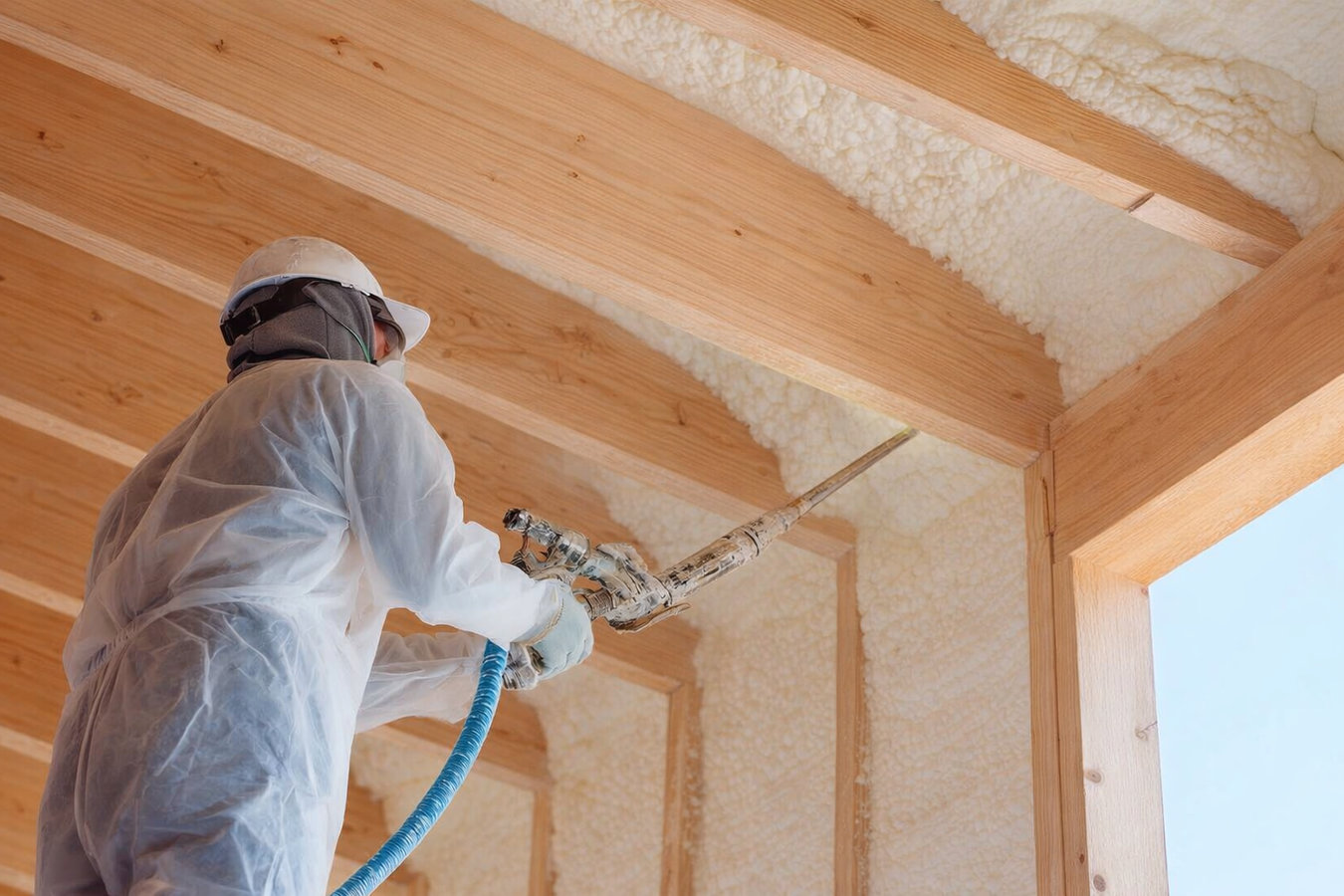
Manhattan Insulation serves homeowners across Manhattan, KS with spray foam, attic insulation, and crawl space insulation - backed by free on-site estimates and same-week scheduling for most jobs.
Manhattan homes built before 1980 often have completely uninsulated rim joists and open crawl spaces. Spray foam insulation seals those gaps permanently and handles both insulation and air sealing in a single application.
Manhattan's Climate Zone 5 rating calls for attic R-values between R-49 and R-60. Most older homes near K-State campus fall well short of that, and upgrading the attic is the single most cost-effective insulation project for the majority of Manhattan homeowners.
Loose-fill cellulose or fiberglass blown into attics and wall cavities fills irregularly framed spaces that batt insulation cannot fit - common in the 1940s through 1960s construction you find throughout the neighborhoods near downtown Manhattan.
Many Manhattan homes have crawl spaces exposed to the Flint Hills clay-heavy soil, which holds moisture year-round. Insulating and encapsulating the crawl space protects your floor framing and keeps the rooms above noticeably warmer in winter.
Kansas wind creates air pressure differences across your home's shell that push outdoor air through every gap it can find. Air sealing addresses the penetrations around pipes, wires, and framing that insulation alone cannot stop.
Homes near the K-State campus that were built before 1980 sometimes have old cellulose or fiberglass that has settled, been disturbed by pest activity, or been contaminated by water. Removing and replacing degraded insulation restores performance and air quality.
Manhattan sits at the eastern edge of the Flint Hills in DOE Climate Zone 5, where winter lows regularly drop below 10 degrees Fahrenheit and summer heat indexes push past 100. That 90-plus degree seasonal swing demands more from your home's thermal envelope than it would in a milder climate. Kansas is also one of the windiest states in the country - the Flint Hills are especially exposed - and wind-driven air infiltration is a meaningfully bigger problem here than in sheltered regions. Insulation that performs well in a calm climate may leave gaps that Kansas wind exploits readily.
The housing stock adds another layer. A large share of Manhattan's homes were built between the 1940s and 1970s - before modern energy codes required minimum insulation levels. Many of these homes have uninsulated rim joists, open or poorly insulated crawl spaces, and attics that fall far short of the R-49 to R-60 target for this climate zone. The combination of a demanding climate and an older housing stock means the gap between a well-insulated and a poorly insulated Manhattan home shows up clearly on every winter energy bill.
We are based in Manhattan and pull permits through the City of Manhattan Community Development office on jobs that require them. That means we know the local requirements - what triggers a permit, what inspections look like, and how to schedule work around them without delaying your project. We have worked on properties throughout the city, from older wood-frame homes with limestone foundations near the downtown core to vinyl-sided ranch homes in the newer subdivisions on the north and west sides.
The areas nearest to Kansas State University and the Aggieville district have some of the oldest housing stock in the city - many homes built in the 1930s through 1950s that have never had their original insulation upgraded. Out past Tuttle Creek Boulevard and along the Kimball Avenue corridor, newer subdivisions present different challenges: homes from the 1990s and 2000s that are now old enough for their first major insulation refresh.
We also serve the surrounding communities nearby. Junction City sits about 15 miles west of Manhattan along US-24 and shares much of the same Flint Hills climate and postwar housing stock. Homeowners in that area face the same combination of cold winters, older homes, and deferred insulation maintenance that we see regularly here in Manhattan.
We take a few quick details about your home and what you are noticing. Most Manhattan homeowners hear back within 1 business day and can schedule an on-site visit within the same week.
A contractor visits your home, checks the attic, crawl space, and any problem areas, and gives you a written estimate with a clear breakdown of scope and cost - before you decide anything.
We schedule the work at a time that fits your calendar. Most Manhattan insulation jobs are completed in a single day, with no need to vacate the home except during spray foam application.
After the work is done, we walk you through the finished installation and answer any questions. You get a clear record of what was installed and where.
We serve homeowners across Manhattan, KS with free on-site estimates and no-pressure quotes. Most jobs are scheduled within the same week.
(785) 236-2287Manhattan, KS is a city of about 55,000 people anchored by Kansas State University and Fort Riley, which together make it one of the more economically active mid-size cities in Kansas. The housing stock reflects that history: neighborhoods close to the K-State campus and downtown Poyntz Avenue include homes from the 1920s through 1960s - many with original wood-frame construction, brick or limestone exteriors, and aging mechanical systems. Further out, along Kimball Avenue and the northwest corridors past Tuttle Creek Lake, newer subdivisions from the 1990s and 2000s feature vinyl siding and attached garages on modest suburban lots.
The city sits at the edge of the Flint Hills, where thin limestone-rich soil and rolling tallgrass prairie define the landscape. That geology affects how foundations behave, how drainage works on sloped lots, and how exposed homes are to the persistent Kansas wind coming off the open prairie. Military families rotating through Fort Riley make up a significant share of the residential population, which means properties see more turnover - and sometimes more deferred maintenance - than in a typical city of this size. We serve homeowners across all of Manhattan's neighborhoods, and we also work in neighboring communities including Junction City, which lies just down US-24 toward Fort Riley.
Every project we take in Manhattan starts with a free written estimate covering the scope and cost. We document each step so you know exactly what was done.
We work regularly on homes from the 1940s-era neighborhoods near Aggieville to the newer subdivisions off Kimball Avenue. We know what the Flint Hills climate and local building practices mean for your insulation.
We are based here, not a traveling crew. We know the local permit office, the housing stock, and what Kansas winters and summers actually do to a home over time.
You receive a written estimate itemizing scope and cost before you commit to anything. No pressure, no vague quotes over the phone, no surprise charges after the fact.
Manhattan Insulation is a local business - not a regional chain dispatching crews from a distant city. Every job we take in Manhattan, KS is handled by a team that knows this market, this climate, and what the housing stock here actually looks like from the inside.
High-performance spray foam that seals and insulates in one application.
Learn moreLoose-fill insulation blown into walls, attics, and hard-to-reach spaces.
Learn moreEliminate drafts and air leaks to maximize your insulation investment.
Learn moreDense, moisture-resistant closed-cell foam for superior R-value.
Learn moreLightweight open-cell foam ideal for interior walls and soundproofing.
Learn moreCommercial-grade insulation for offices, warehouses, and retail spaces.
Learn moreHeavy-duty vapor barriers that block ground moisture in crawl spaces.
Learn moreProfessional vapor barrier installation to protect your structure.
Learn moreServing these cities and communities.
Call or submit a request today - most Manhattan homeowners are scheduled within the week, and every estimate is free with no obligation.