
Loading...
Serving Manhattan, KS and surrounding areas. (785) 236-2287
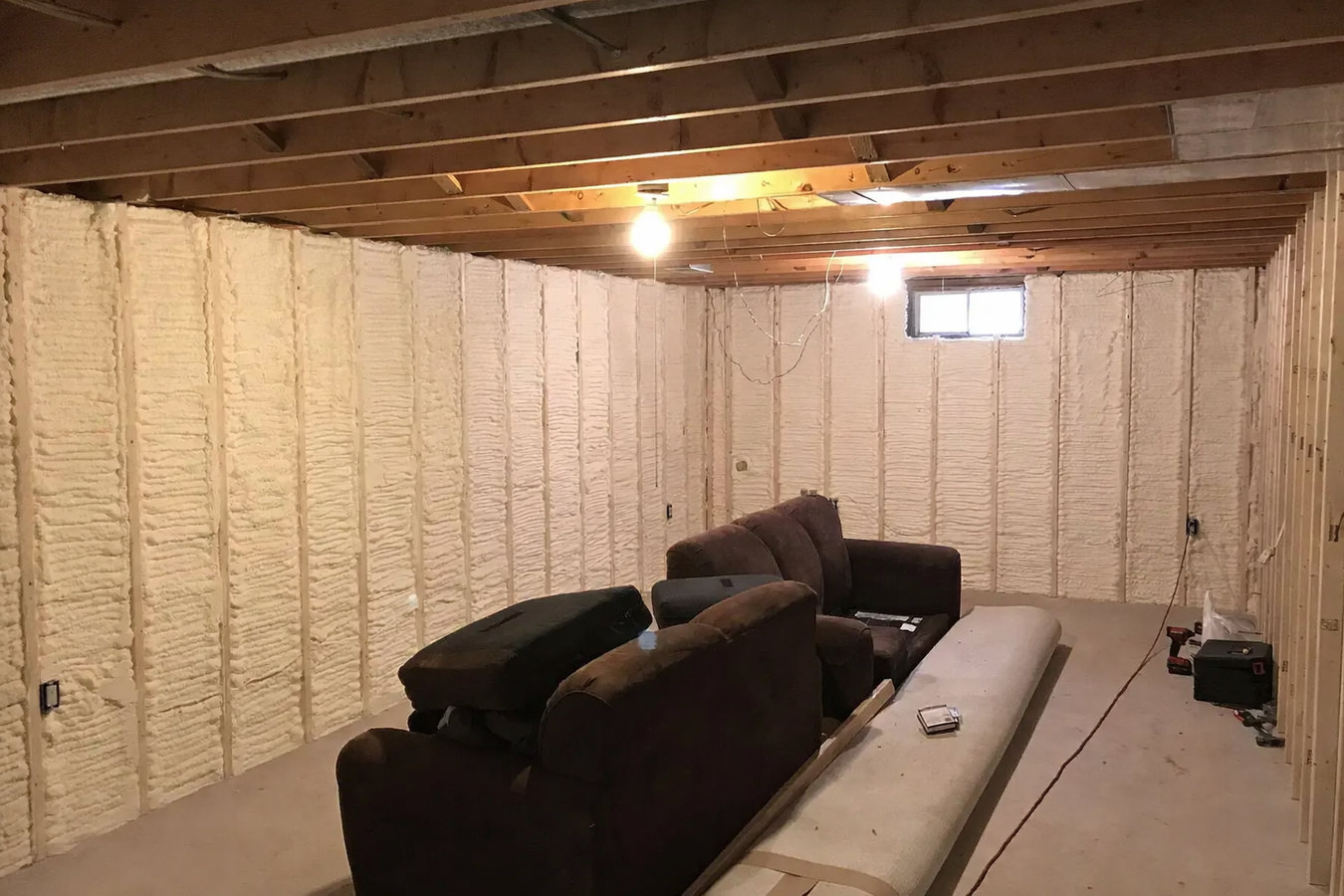
If your basement is uninsulated, your furnace fights an uphill battle every winter. We install basement insulation in Manhattan, KS that stops the cold at its source and cuts your heating costs for years to come.
Basement insulation in Manhattan, KS creates a barrier between your living space and the cold, damp air that collects below ground - most jobs cover basement walls or ceiling in one to two days and deliver measurable results by the first full heating season. Without it, that cold air rises through your floors, making rooms above feel drafty and forcing your furnace to run longer than it should. The U.S. Department of Energy estimates that properly insulating and air-sealing a basement can cut heating and cooling costs by 10 to 20 percent.
A large share of Manhattan homes - particularly those near Kansas State University built in the 1940s through 1970s - were constructed with little or no basement insulation by today's standards. If your home is in that range, the basement is one of the biggest sources of heat loss you have. Pairing basement insulation with closed-cell foam insulation on rim joists and foundation walls gives you a tight thermal envelope from the ground up.
One critical step before any insulation goes in: moisture. Riley County's clay-heavy soils hold water close to your foundation, and if your basement takes on moisture after heavy spring rains, that needs to be resolved first. Trapping moisture behind insulation leads to mold - a far more expensive problem than the one you were trying to solve.
If your gas or electric bill climbs sharply when Kansas temperatures drop and stays high until March, your basement is likely one of the main culprits. An uninsulated basement in Manhattan's climate can account for a large share of your home's heat loss. If the bills feel out of proportion to the weather, the basement is usually the first place to check.
Walk barefoot across the floor of a room above your basement on a cold January morning. If it feels noticeably colder than the rest of the house, heat is escaping downward through an uninsulated basement ceiling. This is one of the most common complaints from homeowners in older Manhattan neighborhoods near the K-State campus.
Manhattan sits on clay-heavy Riley County soils that hold water close to your foundation. If you notice water stains on basement walls, a musty smell after a heavy rain, or visible moisture on surfaces, your basement environment is not well-controlled. Insulation should only go in after that moisture issue is fully resolved.
Homes built before modern energy codes - which covers a large share of Manhattan's housing stock near campus - were often finished with no wall insulation at all. If you can see bare concrete or cinder block on your basement walls, you almost certainly have a significant gap in your home's thermal envelope that costs you money every month.
We install basement insulation using rigid foam boards, spray foam, or a combination of both depending on your walls and what problem we are solving. For basement walls - especially the concrete block walls common in older Manhattan homes near campus - rigid foam boards applied to the interior face create a continuous barrier that does not require perfectly smooth or dry surfaces. For gaps, irregular framing, and rim joists, spray foam expands to fill every opening, delivering both insulation and air sealing in one step.
Insulating basement walls keeps the entire space warmer, which is the right choice if you use the basement for anything beyond storage. If your goal is to protect the rooms above, insulating the basement ceiling - the floor of the room above - is an effective and sometimes less expensive option. We also pair basement insulation with crawl space insulation for homes where both spaces are contributing to heat loss and cold floors. A full assessment during the free estimate will identify which approach makes the most sense for your home.
Best for homeowners who use their basement as living space and want the entire area warm and comfortable.
A cost-effective option for storage-only basements when the main goal is protecting the floors above.
Seals the band of framing just above your foundation - one of the most common air leak points in older Manhattan homes.
Required before any material goes in for homes with Riley County clay-soil moisture pressure against foundation walls.
Manhattan sits in a climate zone where January temperatures regularly drop below 20 degrees and July highs push past 95. That extreme seasonal swing means your basement is constantly fighting temperature and humidity changes from both directions - making insulation a year-round energy tool, not just a winter comfort upgrade. Add Kansas wind to the equation and the basement rim joists become one of the highest-priority air leak points in the house. Homeowners in Manhattan with uninsulated or under-insulated basements tend to feel the payoff faster than those in milder climates because the pressure on the home is more extreme.
The other factor unique to this area is soil. Riley County's clay-heavy soil holds water close to your foundation rather than draining it away. After the heavy spring rains that are common here, that moisture presses against basement walls and, over time, works its way in. Any basement insulation project should begin with an honest conversation about current moisture conditions. Homeowners in Junction City and other Riley and Geary County communities face the same soil conditions, and the same moisture-first rule applies. For more guidance on soil and moisture interactions with foundations, the Kansas Geological Survey has detailed county soil data for this region.
We ask a few quick questions about your basement - roughly how large it is, whether it is finished or unfinished, and whether you have had any water issues. We respond to all inquiries within 1 business day and can usually schedule a visit within a few days.
A contractor walks your basement, checks the walls for moisture, and assesses what is already there. You receive a written estimate covering the area, material, and total cost before any commitment. This visit typically takes 30 to 60 minutes.
Before the crew arrives, move anything stored against the basement walls - boxes, shelving, furniture. The more accessible the walls are, the faster and cleaner the job goes. Your contractor will give you a clear prep list after the assessment.
Most Manhattan basement jobs take one full day. Before the crew leaves, they walk you through the finished work and point out what was done and why. If spray foam was used, it cures fully within 24 hours - after that you can move everything back.
Free on-site estimate. We assess your moisture situation first. No obligation, no pressure.
(785) 236-2287Every job we take in Manhattan starts with a free written estimate that spells out the scope and cost. We document each step and coordinate any permits the work requires.
We come to your home, assess your specific basement and moisture situation, and give you a written price before you decide anything. No obligation, no upsell pressure, no vague estimates over the phone.
We work in Manhattan and the surrounding Kansas communities every week. We know Riley County soils, older campus-area housing stock, and what moisture pressure looks like in a Kansas spring - before we ever pick up a tool.
We assess your basement walls for moisture before any material goes in. Manhattan's clay soils and spring rains create real risk of moisture intrusion, and trapping that behind insulation causes mold - a far more expensive problem to fix later.
Every basement insulation job we do in Manhattan starts with an honest moisture assessment - because the right material and the right installation mean nothing if the conditions behind the wall are not right. That approach protects your investment and gives you results that hold up through Kansas winters and springs for years to come.
The dense, moisture-resistant foam used on basement walls and rim joists where Kansas humidity and water exposure are concerns.
Learn moreExtend the same protection to the crawl space below your home, stopping cold air entry and moisture from Riley County soils.
Learn moreManhattan winters fill our calendar fast - reach out now to lock in your installation date before the fall rush.